In Madrid, thieves work in pairs. One tells you that a bird has soiled your jacket and offers to clean it. The other slips it off and rubs a spot. When they helps you on with your jacket, your wallet is gone and so are the scam artists. In the Caribbean, some street moneychangers deftly fold paper money so that unsuspecting travelers can’t see that they’re counting the same bills twice. The skills of pickpockets on Rome’s trolleys are legendary. 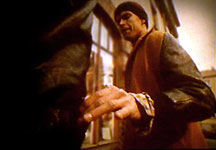 I’ve listened to many travelers recount such tales of their mishaps. Of course, I sympathized, positive that no similar fate would befall me. I prided myself on taking precautions and always being aware of my surroundings.
At the National Museum of Prague, as I was paying for a book in the gift shop, the lights suddenly went out. The old castle was all confusion as people milled about in the dark. Several minutes later, when the electricity came on, I discovered that my wallet had disappeared.
My husband and I reported the theft to the police. They seemed uninterested. We returned to our hotel and the manager helped us to notify our credit card companies. That’s when I realized that my husband and I shouldn’t have been carrying the same bank and credit cards. We had to put a hold on all of them. Now neither of us had access to credit, and between us we had little more than two hundred dollars in cash. I wondered how long it would take for relatives to wire funds. The answer was never. We were traveling through three countries, staying at a different hotel almost every night. Under the circumstances, no hotel would accept a wire.
All in Life Lessons
Racing by the turnoff to the Albuquerque airport, I jeer (in my head, sparing the Roommate reluctantly riding shotgun with Jack the puppy) at the ducks-in-a-line cars turning off, each one sporting a single head as in a two year old’s toy car, heading toward the mile of glinting metal and glass, the far-out parking lot, where I used to leave my car to avoid paying literally hundreds of dollars at the packed airport garage.
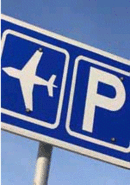
Beyond the garage, the familiar litany of irritations waits: the kiosks that have largely replaced desk personnel, and which routinely refuse my credit card or ask for airport acronyms only a terminal supervisor would know, the ridiculous security parade, where I numbly shed articles of clothing that have nothing to do with any imaginable threat (how long ago was the tennis shoe bomber caught?), the unexplained delays and cancellations, the miserably cramped seats, the disappearance of blankets and pillows, the outrageous sums charged for horrible snacks, and now even for luggage.
This time, I’m driving—1150 miles from my home in Santa Fe to my son’s in Los Angeles.
by Andrea Gross
This is the year I diet. Not by going low-cal: been there, done that. This year I'm going low stress. I'm cutting down on stress as surely as last year I cut down on carbs.
It won't be easy. Stress gives me the same high as chocolate and, try as I might, I can't see the glory in taking a vacation in order to relax. But magazines say it's healthy to turn off your mind and revel in doing nothing. I spent 10 years writing for these magazines, so I have a hard time believing them, but what the heck....If Obama can spend an hour a day playing basketball, I can spend a week a year de-stressing. (This works out to Obama being approximately 168 times more important than I am, which seems to me, if anything, an understatement.)
 But it's a concept that comforts me during my first hour on the beach. I'd prepared well — brought along a beach chair, towel, sunscreen, hat, snacks, and Wally Lamb's 752-page book, The Hour I First Believed, which proves to be too heavy to hold without straining my wrists. I put down the book and wish I had my computer, the nifty laptop that miraculously connects to the web even in the middle of nowhere. But I left it home, in deference to a hubby who said that after forty years of marriage he deserved four days of Nothing to Do.
I even left my cell phone home. Well, I'd cheated a little on this point. I traded mine, which rings or vibrates with comforting regularity — see, I am important — for my dad's. His never rings because he won't turn it on. "It's only for 911," he says. So I brought along his phone and gave the number to my four kids, so I could maintain the fiction that, in case of real emergency, one of my nearly-forty year old kids call for Mommy. Everyone else, I figured, could wait. I'm not that important, after all. I can check out for a week, and the world will still turn.

Zen And The Art of Doing Nothing
Doing nothing is an art—and Ellen Barone has mastered it. In Zen and the Art of Doing Nothing, she reflects on the joy of downtime, from lazing in a Mexican beach casita to savoring silent moments in Santa Fe. Once conditioned to measure worth by achievement, she now embraces balance: action paired with stillness. Like a perfect margarita, her travels blend adventure with well-earned rest.