Poetry is for sissies.

Or so I thought.

If you had told me two years ago that I’d not only read a bit of poetry, but I’d write some, as well, I would have scoffed condescendingly. But take one English poet, add the allure of a French countryside and open an often closed American mind a little, and it’s possible to turn even a jaded and cynical hard news journalist into a believer.
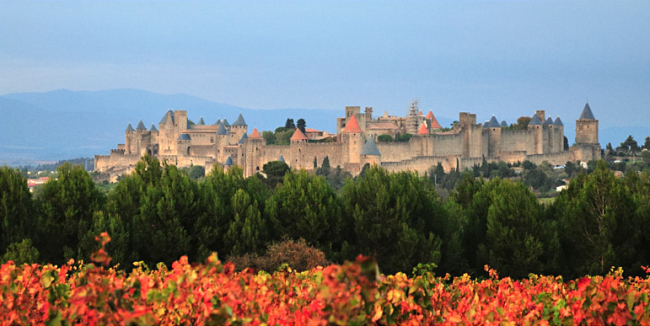
photo by Guillermo Fdez via flickr (common license)
The setting was the French House Party located in the Languedoc region of Southwest France. Carcassonne, a 400-year-old medieval World Heritage site, sits nearby, adding to the appeal of the area. The French House Party “Experience” is an all-inclusive creative arts vacation retreat that offers a variety of courses in such topics as painting, movie-making, singing, cooking and creative writing.

As a longtime newspaperman, I knew how to write. Stringing sentences together in a coherent and concise manner is easy for me. What’s difficult as a crime reporter – my job in my previous life – is dealing with the horrors of society without letting them affect your psyche. Writing about rapes, robberies and racketeering were staples of my day. That was my life as a crime reporter. Dealing with death and destruction daily for nearly 20 years definitely hardened my view of the world. And I guess I took some of that cynicism with me when I turned my back on that era to write about less grim and solemn subjects.

So, just 18 months removed from my life as a newsman, I decided to venture out of my comfort zone, take a trip to Europe and check myself in to a creative writing retreat. I had no idea what to expect. Not only was it my first trip overseas, but it also was my first foray into creative writing. I figured character development, setting, dialogue and other novel-writing topics would be covered. And they were.

Joey and The Wrath of God

by Jess Smith

Dear friends allow me to invite you on another Gypsy memory from my years traveling the country roads and glens of bonny Scotland in a blue single decked bus. I was the tender age of seven.

Spring with its bouncing lambs, yellowed valleys of blooming gorse bush and bluebell woods had given way to a warm sun kissed summer. Early spring rains had brought the fruit fields a mighty yield of raspberries as big as a man’s fist. The farmer on seeing his annual droves of Gypsies arrive at his family friendly campsite was rubbing his hands with glee.

photo by fotologic via flickr (common license)My family of seven sisters, parents and our snappy terrier dog crowded down at the bottom of the field, signalling dad to reverse our bus home onto a nice flat piece of ground which was south-facing and secluded by a hedge of mayflower to meet a rising sun. I ran around laying marker sticks for our relatives who would soon join us. Aunt Maggie and Uncle Joe along with little Ed and his big brother Joey were the first to arrive. I swear to you, Joey was an all time excuse for a human being and I hated the ground he walked on. I had good reason to feel this way because he took a sadistic delight in torturing defenceless creatures like mice, birds and insects where as I gave them all the protection I could.

By late afternoon, Aunt Josephine and Uncle Sandy with their three kids arrived, followed by Aunt Jenny, uncle Toby and their brood of ten who erected a circus tent to accommodate them all for the duration of our fruit picking holiday. By sunset we were a big happy bunch of gypsy people circling a blazing campfire, sharing stories, singing songs and enjoying our cultural ties.

To complete the characters who make up this memory I must now introduce old bible Nell; the most formidable lady in the entire campsite. To the Gypsy people, Nell was a Priestess of high esteem. She wrote the rules on how everyone should behave and co-exist as gypsies. No drinking alcohol on the campsite, no flirting with another man’s wife or another woman’s husband. Dogs should not be allowed to run amok and babies should never be set out in the sun without a hat. Every child who didn’t want a slap from her bony hand or nurse a swollen backside after being caught by a flying wallop from her one-legged crutch stayed well away from her tent. Out of earshot, youngsters would call her a witch, older people with no respect said she was Lucifer reborn.

The Prius & American Flag Index: How to tell where you are

The American flag is red, white and blue; but America itself has become a bicolor place. We have red states and blue states, and almost everyone knows what these terms mean after the hotly contested elections of the new millennium. If people go to the grocery store packing pistols and Bibles, for example, you’re in a red state like Nevada. If folks wear Tevas to go to the store packing canvas shopping bags with the one-world logo on the side, you’re in a blue state: Oregon, say.

But this red-state/blue-state inventory is unsophisticated, obliterating regional differences within states—even neighborhood differences within cities.

by Vera Marie Badertscher


Drop me down in a coffeehouse somewhere in the world, and if I have ever visited that country the native rituals will tell me where I am before I’ve heard a single “sucre”, “glyko”, “milchcafe”, or  “café negro.”

flickr photo by uteart via flickr (common license)In Europe and the Americas, coffee is the upstart, edging out the earlier communal drinks of hot chocolate and hot tea.  I have learned from impeccable sources that coffee was first discovered by goats. That legend somehow makes me feel better about the fact that although I love coffee houses and their ritual, I really can’t stand coffee. With a few slight exceptions, I drink tea—or hot chocolate.

In Greece, my husband and I acquired a taste for Greek coffee, in defense against the alternative to American coffee. The waiter inevitably served a small shiny packet of powdery brown stuff, which would perhaps dissolve if the water in the cup were hot enough.  From the prevalence of this powdery stuff throughout southern Europe, we figured that some Swiss Nescafé guy was one heck of a salesman.

To ease into drinking Greek coffee, served in a small cup that holds strong black liquid on top of a spoonful of black sludge, and makes you grateful it comes in a tiny cup, we took it sweet. This coffee, we decided, explains the hairy chests on Greek fishermen. It helps to drink it down after a glass (or between glasses) of ouzo, the licorice-flavored, clear firewater of Greece. While ouzo is getting you drunk, the strong coffee is sobering you up.  I could keep that routine going for quite a while.

I had first discovered that trick in Switzerland, where I found I could indeed tolerate a cup of coffee livened with a lot of plumkirsche or orange or pear-flavored liquer, or best of all, cheri-suise. Yum!


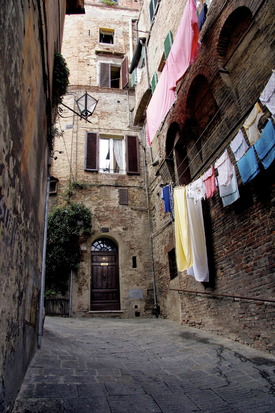
Why is it that the image of colorful clothes hanging on a line and fluttering in the breeze in a foreign country is so appealing and picturesque?  I often grab my camera to snap a photo when I see it, but, somehow, when I have to do my own laundry in the same country, I consider it a chore.  Dirty laundry. They say you shouldn’t air your dirty laundry, but when you’re traveling for more than a week or so, you have to get it clean somehow.

Maybe the ideal trip is 7-10 days.  It’s possible to bring enough clothes for that amount of time.  You come back with a suitcase full of dirty laundry and toss it in the washing machine.  That’s the ideal trip length for some folks, perhaps, but it’s way too short for me!  I prefer packing enough clothes for a few days in a small suitcase and taking my chances about getting them clean while on the road.

I’m always willing to have someone else do my laundry if the price is right.  Laundry by the kilo at a lavanderia in the Galapagos was so easy!  Drop off in the morning; pick up the same night.  It comes back all neatly folded and wrinkle-free.  It worked in the rest of Ecuador too.  When we stayed in a place for a couple of days, we managed to find a lavanderia in the neighborhood.  It was always much cheaper to schlep our clothes to the lavanderia instead of handing them over to the hotel desk.  So, for about $10 or $12, we had clean clothes for our travels.

Newfoundland: Three Lifetimes in Three Days

by Jules Older

I'm a travel writer, which means I'm a hit-and-run artist — New Zealand’s North Island today, the southern Sierra tomorrow. I'm the man who rarely returns.

Except to Newfoundland. I've been five times to Canada's easternmost, poorest and most interesting province. That chunk of rock in the North Atlantic, closer to Ireland than to Vancouver, 1,600 miles east of New York, captured my heart an hour into my first visit.

On the latest visit, I experienced three lifetime thrills in three consecutive days. Where else on earth can you do that?

THRILL ONE: ICEBERGS

It began in the tiny town of Springdale, where we hooked up with ace pilot Rick Adams, owner-operator of Springdale Aviation Ltd.

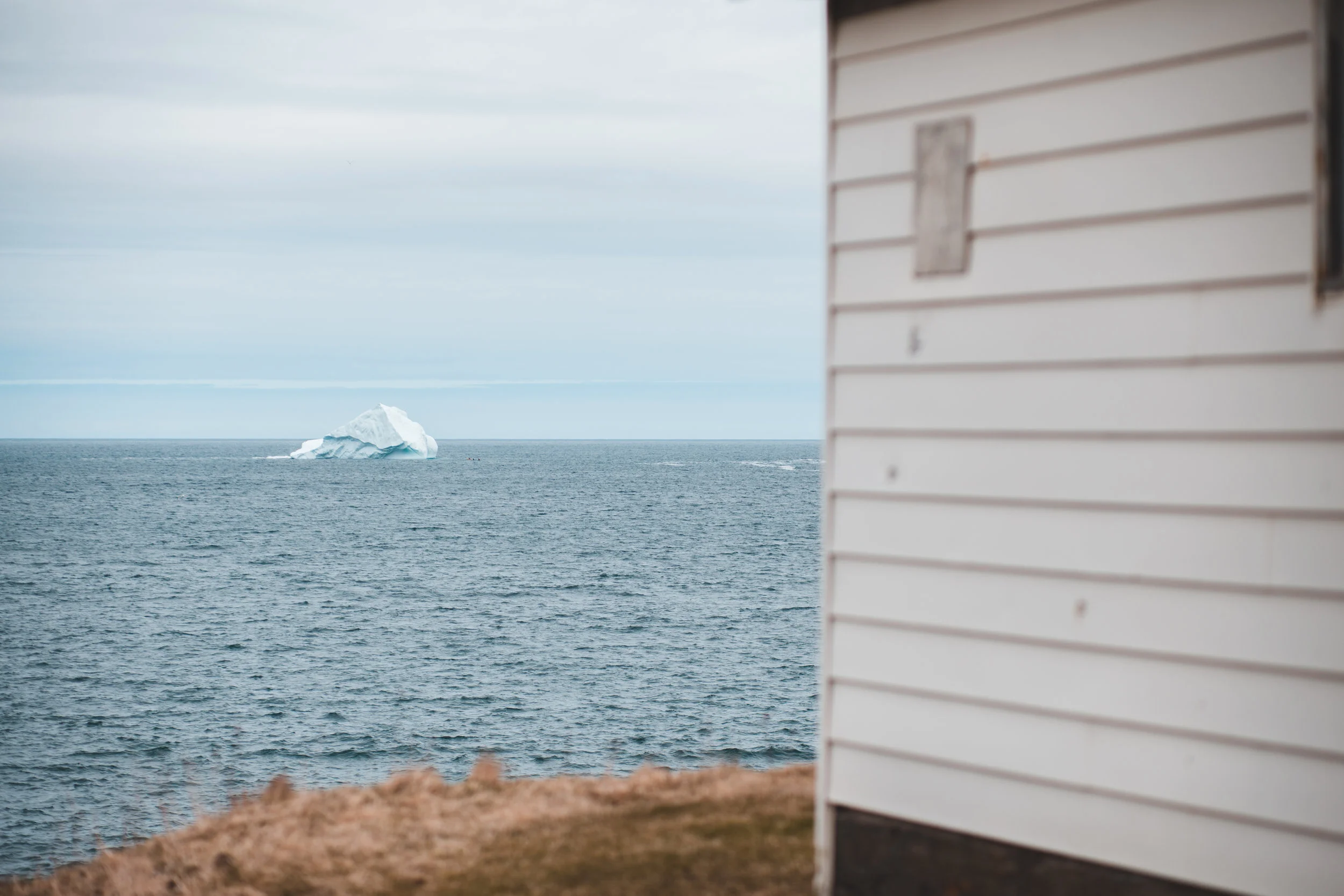
I flew over and around massive icebergs making their way south from Greenland. Never before had I seen a berg, and now they were scant yards below the Cessna 185's wing.

But if iceberging from a low-flying plane is a thrill, berging from a sea kayak is a life event. Because sea kayaking has a very steep learning curve -- you can be moderately proficient in an hour or so -- and because icebergs have a tendency to get stuck just offshore in the province's protected harbors, the experience is open to the many rather than the fit few.

It's a stunning experience. I drove over a hill and down into an outport, Newfoundland for coastal village. My heart thumped a little louder as I spotted the gleaming white of half a dozen icebergs towering above the dark water like dollops of cream on a chocolate cake. I couldn't wait to haul the kayak off the roof of the van.

by Kathleen Koprowski

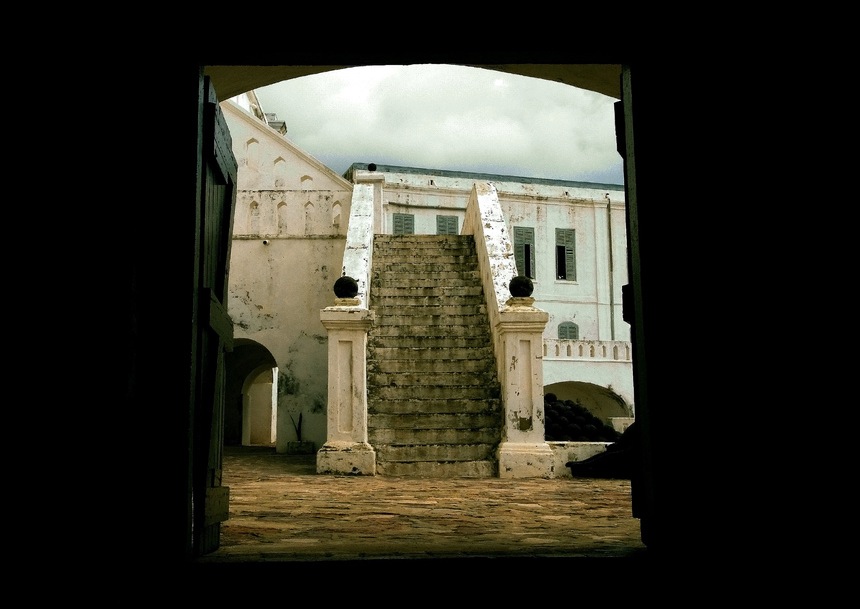
Photo by bdinphoenix via Flickr (Creative Commons)I stepped out of the flat, gray day and into the black depths of the tunnel that led to the Female Dungeon beneath the Cape Coast Castle. Sensing my way along the stone floor, I followed the footsteps of other visitors ahead as my eyes gradually adjusted to the darkness. Cool air in the tunnel provided no lasting respite from the thick humidity outside; any sense of relief was overshadowed by the heavy weight of souls in this place. We fell silent, immediately sensing the terrible truths housed within.

The castle guide led us down, down underground to the dungeon used to hold female slaves before they were taken from Africa’s Gold Coast (now Ghana) to be sold in the Americas at the height of the slave trade in the 1800’s.  He ushered our small group into a stone chamber and closed the heavy door behind us.  A single bare light bulb illuminated the room for just a moment before he flipped the switch, pitching us into blackness.  No one spoke.  

Fear and Longing in Scotlan

by Rachel Dickinson

When I was twenty I got on a plane and went to Edinburgh, Scotland, to live for a year. It was 1978 and I had just graduated from college and was headed to Scotland because I had won a fellowship from a foundation that wrote me a check for $6,000 and said have a good time. I had to do a project outside the United States and I chose one in Scotland because it seemed more exotic than England and yet they still spoke English. Kind of.

The Camino de Santiago: An Inner and Outer Journey

by Elyn Aviva

I first heard about the Camino de Santiago in 1981 from my friend Michael, when I was looking for a topic for my Ph.D. in cultural anthropology. Michael idly mentioned there had been an important medieval pilgrimage road in Spain and suggested I look for it—I might find its art and architecture of some interest.

In the summer of 1981 I arrived in Spain, still looking for a topic for anthropological fieldwork. I ended up in Sahagún, a small town in the north-central province of León, where I stayed at the Benedictine nuns’ guesthouse.

by Jessica Lynn


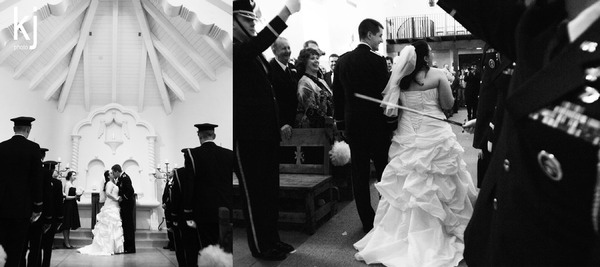
Last month I took one of the best trips of my life. It wasn’t to the Amazon or Asia, and I didn’t travel around Europe or Australia. Instead, one arm grasped around my dad’s arm and the other held tight to a fragrant bouquet of light pink carnations and roses as I took my last steps as a single lady.

My journey to wedded bliss began more than four years ago when, thanks to the military, my then boyfriend/now husband and I were living across the country from each other. He was stationed in Georgia and I was living in New Mexico. Not only did people tell me how hard it was to date someone in the military, but they also said a long-distance relationship would never last. After using our hard-earned vacation time to see each other, making sure communication and trust were number one priorities in our relationship, and racking up thousands of frequent flier miles, we made it work.

He proposed on Valentine’s Day in 2009 while I was visiting him, and after a short celebratory weekend, I flew home with an engagement ring sparkling on my left hand and started planning our wedding.

Luckily, my husband didn’t deploy over the course of our engagement, but the military still played a hand in influencing the specifics for the wedding. The date of the wedding was determined by when his best man and groomsman returned from their deployments.

by Pete Thompson


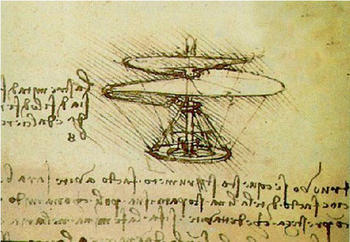
The richness of human imagination has rarely been more realized than in the day/night dreams of Leonardo da Vinci which have deeply impacted modern humankind. Although his fantasy images were limited to the available technologies of the day, he nonetheless, envisioned each as real and probable in time. His fifteenth century vision of a machine capable of leaping into the air under the control of humans in flight has come to pass in the helicopter. I can imagine him watching birds doing these things and actually, in his mind, performing them, himself.  When I was a child, people asked me what I wanted to be when I grew up. As serious as a monk in prayer, I answered, "A bird!" I have experienced, in every human sense possible, the thrill of flight that Leonardo envisioned as the nearest humans could initiate actual bird flight. 

I AM a helicopter pilot therefore I AM a helicopter.  The integration between a human and a machine is complete when the former is strapped into the latter becoming one and the same. Every human sense becomes ten-fold more sensitive to the machine, and each vibration, sound, smell, sight, and touch becomes acute. When you break friction with the earth, you are no longer in the human world but in the world where the inhabitants are naturally equipped to fly.  You may dance upon the air through every landscape that exists. Leonardo's vision inhabited many inventors, but one, in the twentieth century, made it real….Igor Sikorsky.  Others followed in his footsteps, making the machine better and more friendly to those who have the lust to be a bird. One of those who believed in the machine enough to make it better and safer, my hero, Howard Hughes.

Through odd circumstances, I became a helicopter pilot, and no matter how odd, I have benefited beyond my wildest dreams. It is my goal to share the most wondrous of human experiences by leaping into the air and flying like a bird.

by W.M. Wiggins

Do you remember Icarus from Greek Mythology? Well, he may have been the first and original flyboy……… you see, piloting goes w-a-a-a-y back.

Icarus and his father, Daedalus, were being held captive in a sky-high tower of that nasty King Minos of Crete… and it was a far piece to the ground, let me tell you….even by Texas standards.

Icarus’ father, Daedalus, who was widely recognized as the master of ingenuity, concocted flyable wings from bee’s wax and feathers. That was just about all the material to be found in that high, old tower. Once those bird-like wings were securely mounted on Icarus and Daedalus, they were almost ready to take flight…but first, that obligatory pre departure briefing.

“Son”, says Icarus’ father, “Don’t fly too close to the Sun or too close to the water.” “If you do, son, you will be in a h-e-a-p of trouble.”

Well, we know the rest of the story. Icarus, flying in a loose formation behind his father, became bored. He zoom-climbed high toward that hot, hot, sun…melting the wax that held the feathers in place. Ploop! Into the sea he went and drowned.

Fast forward. That was then, this is now.

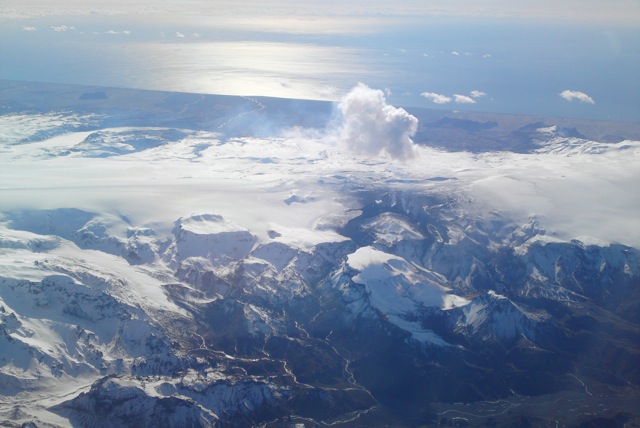
Iceland’s EYJAFJALLAJOKULL volcano (that’s easy for you to say) goes Ka Boom!

In this explosive eruption, volcanic ash is taken tens of thousands of feet into the air….and that’s the rub. Jet airliners need to fly in this airspace.

So, what’s the Big Deal? Ash, that’s just like dirtier dirt…right?

UNFORTUNATELY, NOOOOOOOO…..!!!

by Jules Older


Travel writers aren't famous ethicists. If we aren't cavorting on some pristine beach in the Caribbean, we’re scarfing down lamb chops at some snooty restaurant in San Francisco.

But every once in awhile, we get to flex our moral muscles. And I've just come from my workout at the Ethics Gym.

I started pumping iron when Arizona’s governor signed what the papers are calling “the most restrictive immigration bill in the country” and which I’m calling, “the Up against the wall, Brownie!” law.

And heading for her signature is a second bill. This one will require American presidential candidates to prove — to the Arizona Secretary of State — that they were born in the USA. So, come next election, President Obama could be kept off the ballot in Arizona, since nothing will ever convince the hardcore that he’s not a Commie-Muslim from Kenya.

The papers call this the “birther” bill. I call it the “Klan in cowboy boots” bill.

Most of my friends agree that the law and the bill are nasty, bigoted and more in keeping with the spirit of 1910 than 2010. But since my friends don’t live in Arizona, they think there's not much they can do about it.

Oh, but I can. I'm a travel writer.


When I was invited to spend a week sailing off the coast of Maine, I expected to make witty conversation as I toasted nattily-clad fellow passengers with a glass of vintage champagne. You know, like Walter Cronkite, or one of the Kennedys.

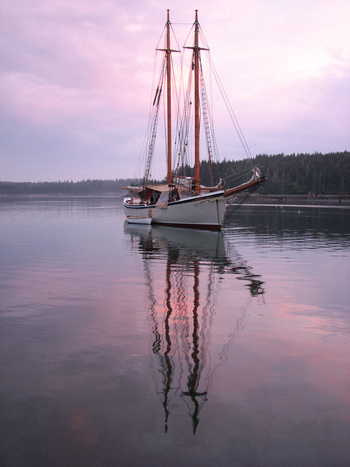
The Schooner American EagleAfter all, what did I know about sailing? I grew up in Kansas and Nebraska, two states that are about as removed from the ocean as the Sahara is from the North Pole. 

So you can imagine my surprise when I boarded the American Eagle, an authentic Maine windjammer. Seventy-five years ago she was hauling fish from one port to another; today she carries passengers on cruises around Penobscot Bay.

Despite the loving restoration done by Captain John Foss, nothing can change the fact that I was going to be sleeping in a cabin carved out of the old cargo area, the same place that was once filled with dead fish.

Like Dorothy, I wished I were back in Kansas.

The first night I cracked my head when I sat up in bed. No headroom.

The second day I strained my back when I helped hoist the sails. No know how.

There were only a few canvas chairs on deck, so I found a place on the floor. Whoops — on the deck.

"Wicked nice, isn't it?" asked one of the passengers, a born-and-bred New Englander who'd been sailing all his life. Wicked? That's when I learned that "wicked" means "very" in New England-speak and “cool” in hip-talk. But I’m neither a grizzled Yankee nor a young chick, and where I come from, the word "wicked" is used to describe the Witch of the West and serial murderers.

But by the third day I was sea steady if not exactly sea savvy. When the wind blew hard, the boat seemed to fly, skimming over the water with deck tilted and passengers cheering and laughing. But mostly it moved slowly, giving a sensation of drifting—and dreaming.

My personal Glacier Bay

by Kristine K. Mietzner


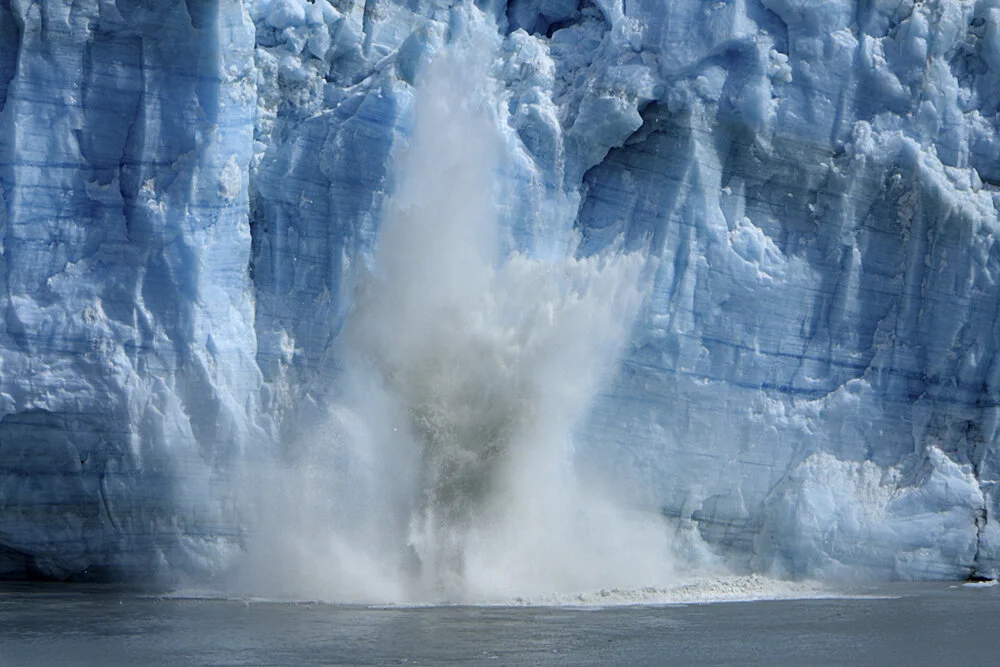
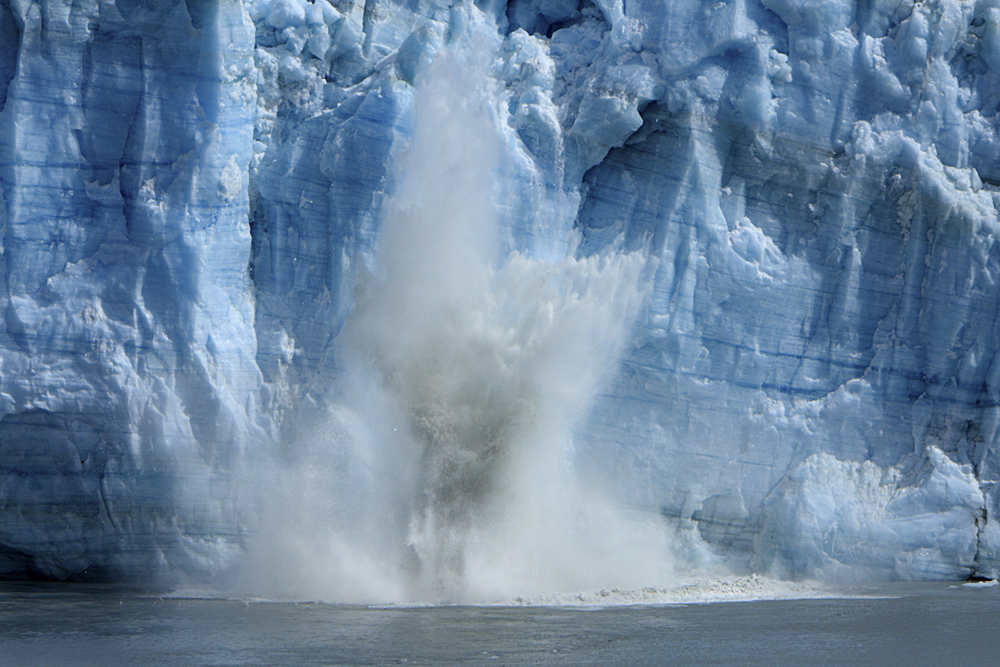
Roar. We heard an earthquake-like rumble.

In Glacier Bay, an enormous, luminous, turquoise chunk sheared off the icepack and dropped in the water. The Grand Pacific Glacier calved before our eyes, as it had for John Muir on his Voyages of Discovery into Southeast Alaska. While Muir traveled by dugout canoe with the Tlingit Indians, we cruised on a small tour boat with a National Park Service naturalist.

“Mom, it’s awesome!” Ben said.  I shrugged as if to say he could find a better word.  He answered, “Okay! It’s glorious!” My fourteen-year-old’s eyes sparkled with a three-year-old’s look of wonder. The weary look born by too many video games slipped away.

Whoosh. Waves caused by the crashing ice rocked our ship. Silently, we exchanged wide-eyed glances. Transfixed, we feasted our eyes on the moment in time.   

Whirr. A chill wind whisked off the glacier, swept through our layers of tee-shirts, wool sweaters, and windbreakers, brushed and reddened our faces.  

Life stopped in Glacier Bay in the ice age. Rivers that once cascaded to the Pacific Ocean froze in time. These days, the aqua ice is melting. 

Remember? Memory whispered, Remember how you first saw this when you were a young journalist, single, and so full of dreams?  Twenty some years had passed since a pilot friend had flown me to Gustavus, sending me on my first venture into Glacier Bay. Within a few years, I married, moved to California, became a mom, created a home, and taught school. In showing Alaska to Ben, I returned to a familiar place. I realized that I had revisited it many times. Memory had been my constant companion and Glacier Bay a favorite place to travel. 

We love it when we can pass along an opportunity for free travel. Even better when it's a reward for persuasive writing! So, if you (or anyone you know) are planning to tie the knot, check out this opportunity for eco-conscience brides and grooms from the USA and Canada to win the wedding of their dreams in the Cook Islands. The winning couple also gets to bring along four family/friends to celebrate!


Prizes includes roundtrip airfare on Air New Zealand from Los Angeles to the Cook Islands, accommodation for the bride/groom plus four guests, and an eco-friendly wedding ceremony and reception including South Pacific traditions.