words + photos by Carolyn Handler Miller


Jews and Egypt. Two words that rarely meet in the same sentence. Unless you happen to be talking Bible talk and are retelling the story of Exodus, as we Jews do every spring during Passover. Or unless you are talking politics, and are discussing Egypt’s relationship with Israel.  Or unless you possess a torn old photo like the one I have, plus a burning curiosity and the chance to travel to Egypt.
You see, the relationship between Jews and Egypt is a highly personal one for me, and one that the revolution in Egypt brought into sharp focus.           

A large branch of my family once lived and thrived in Egypt until the 1950’s, when another Egyptian revolution, one barely remembered today, ultimately pushed Egyptian Jews into exile. In 1952, during that earlier revolution, King Farouk was forced to abdicate and soon after, Gamal Nasser took over the reins of government. Unlike the laid-back playboy king, Nasser was unfriendly to Jews. During the 1956 Suez Crisis, he declared them enemies of the state and Jews were no longer welcome in the country.

So the entire Egyptian branch of family fled to Paris. At that point, we, the American branch of the family, lost track of them. As far as we all knew, the story ended there.

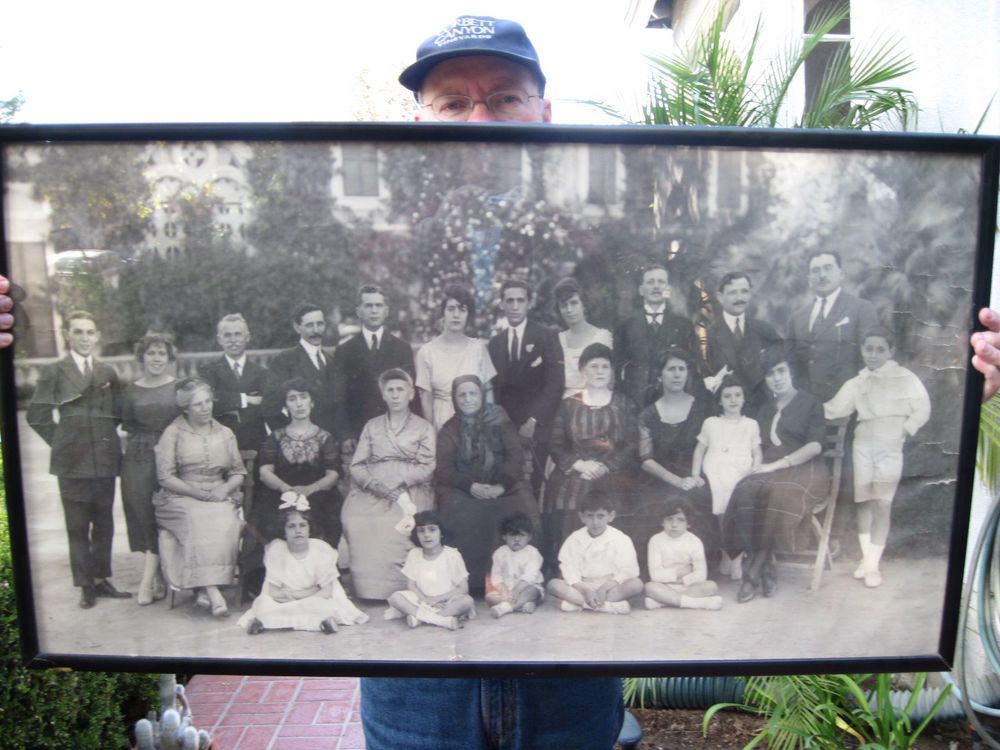
And we might have forgotten all about them, except for this old black and white photo set in a broken wooden frame. It had been passed down from family member to family member and had finally fallen into my hands when none of my cousins showed any interest in it. Though they mocked the old-fashioned looking group, I found them fascinating. I longed to know more about them and their exotic life in Egypt.

The photo captures my Great Grandmother at a family reunion in Alexandria.
by Judith Fein


The last time Americans were riveted to a foreign square, it was Tiananmen, and the year was 1989. Anti-government demonstrators –mostly students and intellectuals--wanting more democracy and less autocracy filled the square in Bejing.  Other protests erupted around the People’s Republic of China. In a show of force the T.V. audience will never forget, government tanks rolled into the square and gunned down thousands of demonstrators. Tiananmen Square went silent, and the subject of the massacre is still taboo in China.

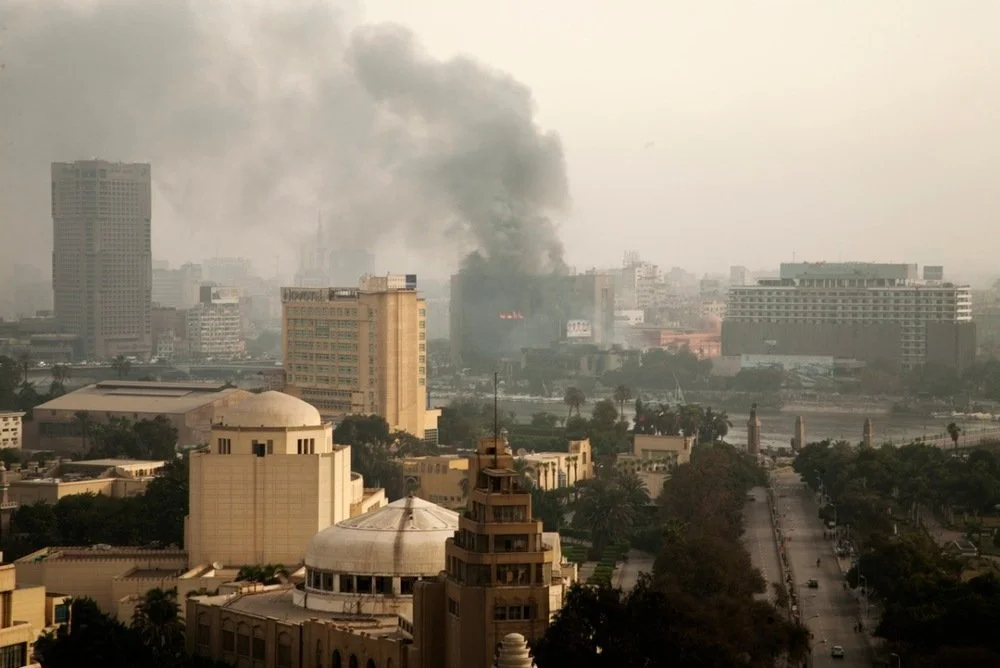
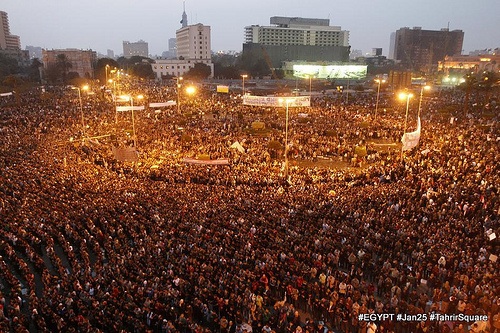
This time, all eyes were on Egypt and Tahrir Square. Once again, young protestors defiantly showed their opposition to the government and demanded that Hosni Mubarak pack up his toys of dictatorship and leave Egypt. But Mubarak played by his own rules, and when his trifling concessions were rejected, when even his offer not to run again was scorned, he pulled a Tiananmen—sending in his heavy guns to shoot indiscriminately into the crowd.

photo by Peta-de-Aztlan via flickr common license

The protestors refused to buckle, and the Egyptian nation mourned its innocent dead who were assassinated for demanding freedom. The world watched and wept and then rejoiced with them.

The ignition key to revolution was turned on by tiny Tunisia, in North Africa. The protestors upended the 23-year reign of autocrat Ben Ali, drove him into exile and exacted the dissolution of his corrupt RCD party. In a rapid move toward democracy, Ben Ali’s minions were fired or resigned, and the young people exulted in what, for many, was the first freedom they had known in their lives.

The cost of this revolution was high: as many as two hundred young lives were snuffed out. And, in a country of 10 million, everyone was affected by this horrible loss of life. There is mass mourning for the deaths, and the victims are considered martyrs to the cause of freedom.

Tunisia is one of my favorite countries in the world. I have been there seven times, lived there for 6 months when I was making two films with my husband, and have a deep and abiding affection for the gentle, kind, extremely generous Tunisians.

TUCSON AFTER THE SHOOTING: To go or not to go?

It was just an ordinary neighborhood Safeway until a heavily armed lunatic showed up with a pistol. What happened next was disastrous.

I’m speaking, of course, of our local Safeway in Ballard, Washington, where I live—but you thought I was talking about the store in the Tucson foothills where an unbalanced young American gunned down six people and tried to assassinate a U.S. congresswoman. What happened at the Ballard Safeway was “milder” but in its own way illuminating, and the irony struck me because both places are well known to me. I visit Tucson a half-dozen times a year and wrote a guide to the city for a major global internet site. I am very fond of both places. I buy great heaps of toilet paper at the Ballard Safeway; at the Tucson Safeway, I help out my dad by loading up sacks of salt for his water softener.

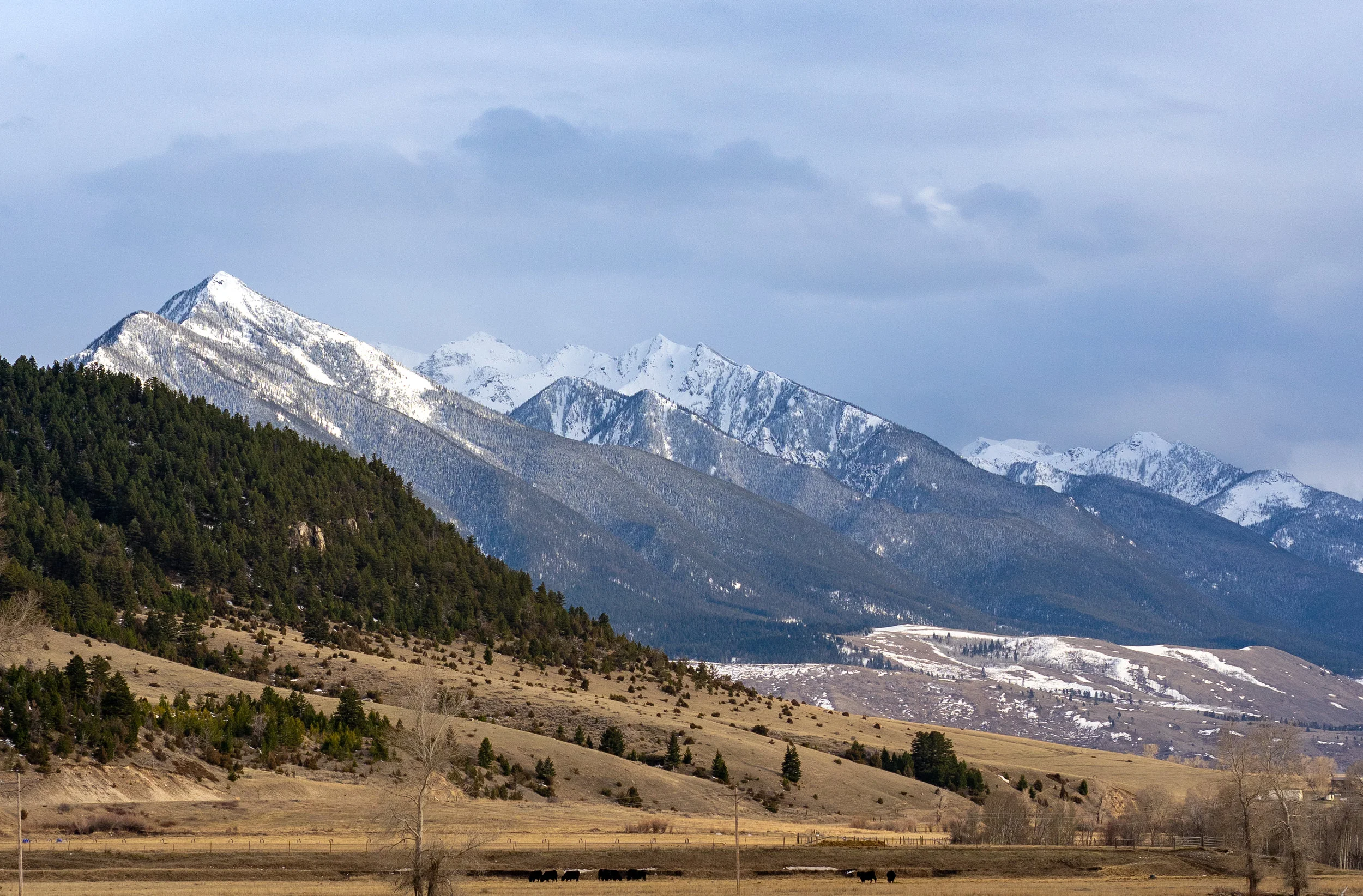
Montana on my mind

by Jules Older

When I teach skiing, I suggest to my students that, to establish and hold a rhythm, they find their ski song.

Truth is, my ski songs find me. My usual one is Sweet Georgia Brown. When I skied West Virginia, it morphed into Miner’s Lifeguard. When I crossed from Switzerland’s French side to the German, my song suddenly switched to Springtime for Hitler and Germany.

See? My song finds me.

First-Person Report From Egypt

words and photography by W.M. Wiggins

On arrival at the Cairo airport from JFK, we (the passengers) were taken by the standard jet-to-terminal bus. I noticed on the tarmac a "Special" aircraft parked all by itself on the ramp and heavily guarded. I am fairly sure who operates this jet. Lots of pilots call them Caspers. A Casper is a jet or aircraft with NO tail numbers or markings whatsoever. It shows up, and then it disappears......like the ghost. In this case, Casper was white.

The following day, we were road-blocked as three heavily armed SUVs sped down the street. Please note...there are NO OTHER SUV's like this in Cairo...at least I have not seen them. But you might find these same S.U.V.'s being used by folks who are "visiting" Iraq.  I also noticed a C-130 Hercules taking off later...either from Cairo or Luxor. And I thought: now, isn't that special? 

Discover the Exotic on a Road Trip

by Vera Marie Badertscher

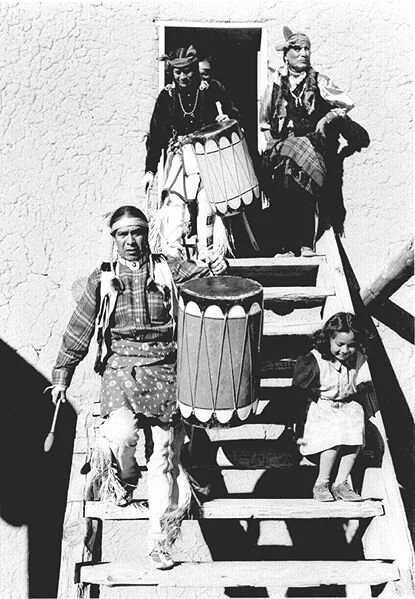
“None of your business,” she said. The short, curly, white hair bounced as she shook her head, but the brown eyes smiled in her beautiful, tanned and weathered face. Half Navajo, Suzie (not her real name) has lived in Rio Grand pueblos in New Mexico all her life. We were sitting in a rambling adobe house near the village where she lives with her husband. Grandchildren and daughters dropped in from time to time as we talked. The smell of cedarwood smoke curled around us, and tin-framed pictures of saints glinted on the walls.

I am a shy person. I spend most of my days alone. Although it was daunting to figure out how to pack my 21-inch carry on with clothes for hot weather in Rapa Nui and Buenos Aires and freezing weather in Patagonia, dealing with more than a dozen strangers for three weeks was even more of a challenge. During the first few days of the trip I quietly mingled and occasionally exchanged stories, but it wasn’t until the group and I were in the Buenos Aires airport that I discovered there were limits to my shyness.

words by Judith Feinphotography by Paul Ross


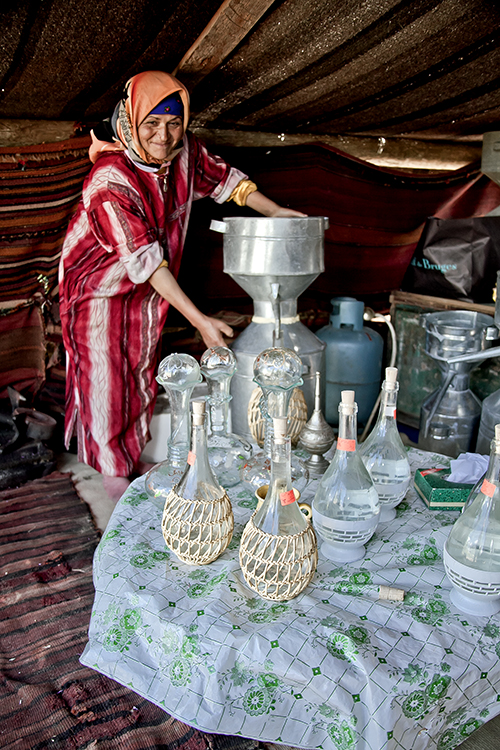
I am  in love...with Tunisia. When I close my eyes and think about the kindness, hospitality and open-heartedness of the Tunisian people, I want to jump on a plane and go back. I've been to Tunisia seven times, lived there for six months, made two films about the country. But I hardly expected what has happened over the last week: there has been a grass-roots revolution.  The Tunisian people have risen up against their tyrannical leader, and said no to repression. They have risked their lives in their fight for freedom. 

In my lifetime, the Solidarity movement in Poland catapulted to power. The Berlin wall fell. The Soviet Union fell apart. And now, in a small Arab Muslim nation in North Africa, a despot has been deposed and the people are demanding democracy. 

READ why I think the revolution and the country should be on your radar in my RECENT ARTICLE FOR THE HUFFINGTON POST

And maybe, this year, if the stars are aligned correctly, you'll JOIN ME FOR A TRIP to the new Tunisia.  If you're game, drop me an email


by Debbie Wilson

Usually, at this time of year, I’m thinking about hearts, flowers, and chocolate in sweet, loving surroundings. I can’t believe that every year I descend into embarrassing fantasy clichés, so, this year, I’m trying something different. I’ve set out to find places where you or Cupid would never think of going.  Places you can immediately eliminate from your Valentine bucket list.  


Vegas Soul

by Jules Older

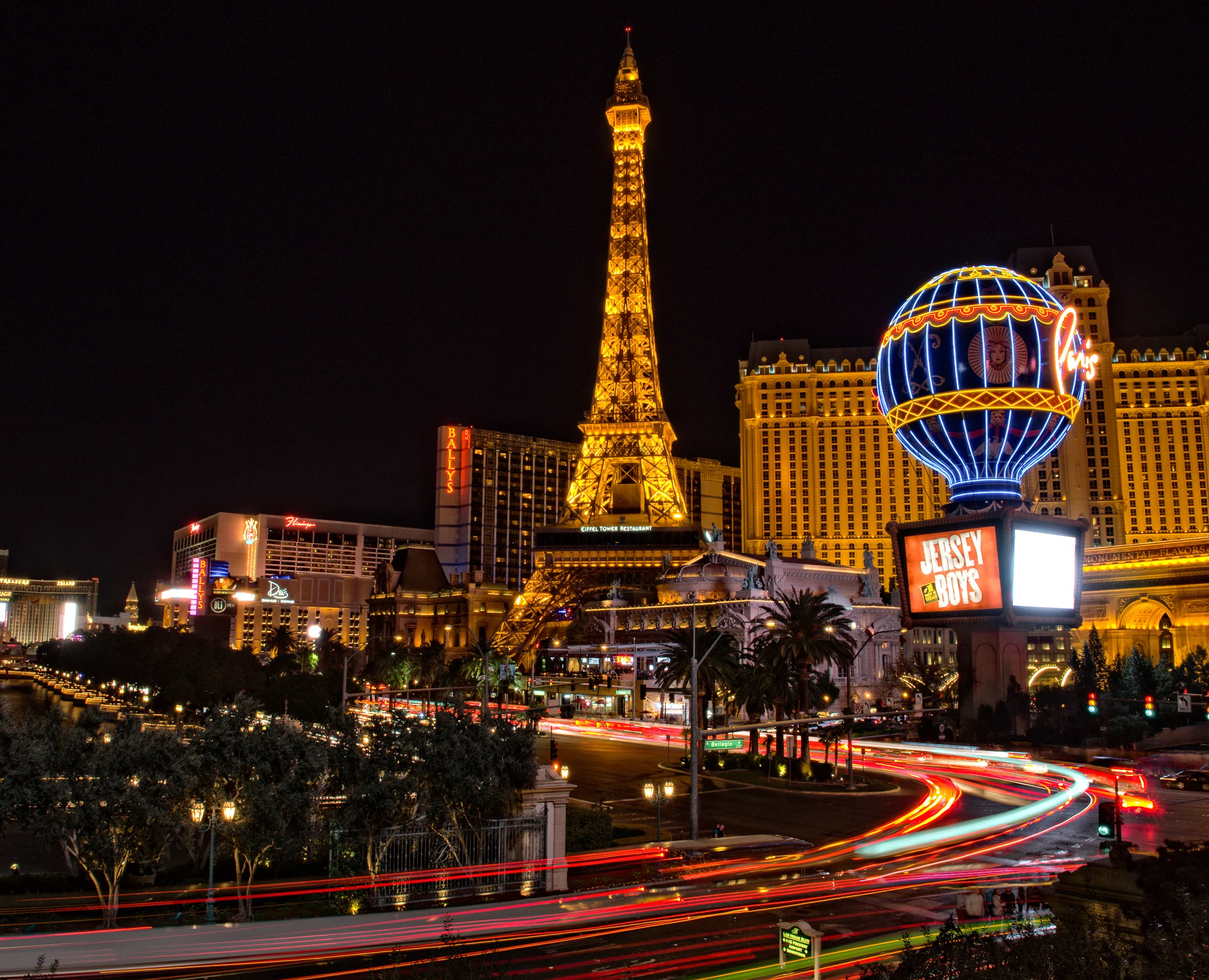
People seem to think that Las Vegas has no soul. There are soulless towns, but Vegas isn't one of them.

For most, the soul of Vegas is probably the Strip, that ever-lengthening line-up of grand hotels, most of them heavily themed. From a Magic Kingdom look-alike to Manhattan Island to gay Paree, to an Arabian bazaar… by the time you finish reading this, there will be at least two more gone and three more — bigger and more sumptuous — replacing them.

by Rachel Dickinson

You might characterize me as a casual birder, which is one-step up from an armchair birder. I am married to a man who once headed the Sapsucker team for the Cornell Lab of Ornithology in the World Series of Birding so just through sheer osmosis I should be a much better birder than I am. But that would mean I’d have to pay attention.

Nicaragua: Can you keep a secret?

words + photos by Ellen Barone

Here's the truth: I want to tell you about Nicaragua and its wild, deserted Pacific beaches, active volcanoes, colonial cities, coffee plantations, and verdant mountains— but then again, I don't.

Writing about delicate cultures like Nicaragua, where complex political, geographical and economic realities have resulted in hardships on one hand - and a simpler, more grounded way of life on the other - always brings up mixed feelings in me.

by Judith Fein


There’s this organ in the middle of my chest that obliges me every second of every day by beating. It can be wounded, disarmed and stunned, but it keeps on doing its job. And it only asks me for one thing in return: “stay open,” it whispers. “Just stay open.”

photo by wiccked via flickr common licenseMaybe at one point in time it was a real effort. I think I recall suspicions I harbored and some swirling fears. But, over the years, my heart does its job and I do mine. It beats, I stay open. Not all the time—because there are hurts that catch me off guard and cause me to recoil—but, as a rule, I stay exposed in life.

The risk, as you can imagine, is pain. The reward is pleasure, connection, and the ability to feel freely. I have weighed risk and reward and come down on the side of the latter.

My heart and I have traveled widely, and when someone asks me what my favorite country is I generally answer, “the last one I visited.” I am moved by the generosity, quirkiness and depth of the people I meet on the road. I love their cultures and customs and the unique way they navigate life.

Driving Myself Crazy Searching for the Ecological Solution

by Susanna Starr

Since speaking on the cell phone is prohibited when you’re driving in Santa Fe, I pulled over to answer mine, which rang just before approaching Beaver Toyota. So, it was the most logical thing to drive into the parking lot of a large car dealership.

After getting off the phone, I was approached by a nice looking young salesman who asked if he could show me something. Without having any previous thought as to purchasing a vehicle, I responded by saying, “Only if you have a used hybrid that’s not a small car.” A small car would never fit my lifestyle. My modus operandi is to throw all kinds of stuff into my vehicle -- bags of compost, stacks of newspapers for recycling, and lots more.

words + illustration by K. Michael Crawford


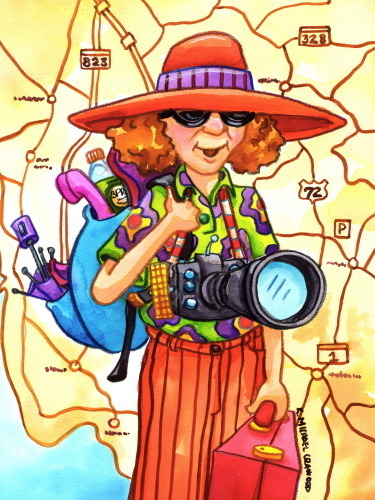
I can’t believe the day is finally here. After months of keeping my head to the grindstone to finish my latest book, I am getting a vacation.  So now, I can gather up my finest vacation wear and head out the door for a little fun in the sun or maybe a Shirley Temple on the beach. Wherever this vacation goes, I will follow.

Before I head out the door, I know that every good vacation needs the essentials. So, with first things first, I forge through my closet to make sure I have the perfect vacation clothing. You have to look just right, part “world traveler” and part “oh yeah, I don’t stand out too much and look like an idiot.” To select the right look, I put on a slightly wrinkled top with comfortable wrinkled pants. Next, comfortable sneakers are always my choice of shoes for getting away from it all. Besides being great for walking, they are great with the “airline only lets me have one bag now” look.  The last thing I do, as far as my appearance goes, is put my hair up for easy maneuvering through new and exotic places. 

Now, for the add-ons. Everyone knows that you need a big wamping camera to announce to the locals, “Come and get me. I am just waiting to be mugged.” So I place my Hubble Telescope camera around my neck, followed by a straw hat large enough to house a small family. The hat is also used to shield any type of ray from the sun two universes over and prevent any orbiting satellites from identifying that it’s me in the photo.

Any good tourist knows what goes in their backpack or satchel is the most important element to enjoying that fun-filled vacation. You never know what you will stumble upon, so you want to be prepared for the unexpected, or in my case most of the time, the unexplained.

words + photos by Janet Schneider


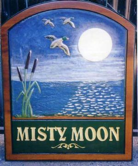
On a recent 20-mile bike ride along Torch Lake Drive in Northern Michigan, I expected to see beautiful views of what National Geographic has called “the third most beautiful lake in the world.” However, from the road, I saw very little of the lake. Most of the houses were also concealed from sight. Instead, I noticed the wooden signs sprouting at the end of driveways like mushrooms, or attached to mailboxes like antlers.

These signs contained not only the homeowners’ but their properties’ names as well. Similar to the language found on boats, these often were terms of endearment or hopeful expressions of escape, fun and abandonment.  While admiring these intricately decorated signs, I speculated about the inhabitants’ lake lives and recalled my own memories of lakeside cabin life.

From my bike height perspective, I was in the perfect position to focus on these owner-selected symbols of lake activity. It was clear from the choices made about their signs: shapes, materials, colors, font styles, and images, owners took tremendous pride in these homes. These signs were primarily made of wood, engraved with colorful scenes of lakes and their wildlife including birds such as loons, herons, or eagles. I cycled by painted images of natural settings with sand, plantings, the sky, and the sun.  I slowed down at one memorable sign, an enlarged photograph of a golden sunset over a lake.

It is common for Southeast Michigan residents to own a cabin “Up North.” Many of these have been passed down and bring to mind happy inter-generational family memories. Families travel to these special places on weekends throughout the year and in the summer. They only differ by size, location (lake access the most treasured), and amenities such as a dock, deck, screened-in porch, or remodeled kitchen.

It was a perfect day for cycling – 70 degrees and overcast in late afternoon.

by Gillian Kendall


If I’d gotten a fortune cookie yesterday, it would have read: ‘Overconfidence brings misfortune.’ Or maybe, ‘Stay close to home today.’ 

Lacking such foresight, I was feeling cheerful about the two little flights – each less than 4 hours – that would take me from Florida to Arizona. This trip was trivial compared to the one from LAX to Melbourne: 16 hours in the air, which I do several times a year.

I barely even packed. In my carryon, I had just a computer, wallet, and paperback – Anne Frank’s Diary of A Young Girl, which I was reading for the first time.

A friend dropped me at sweet little Sarasota/Bradenton airport exactly 90 minutes before my 1.34 p.m. flight. But at the Delta counter, I heard a staff member apologizing to another customer: our flight was delayed at least an hour.

Over the PA, an agent made the unsmiling declaration that that Atlanta airport was opening and closing all day, due to “weather,” and that if we made it there during a brief open period, we’d probably be spending the night there, not getting on to our final destinations. That, or we could go home and start again tomorrow.

I had booked a “calming facial” the next morning at the Royal Palms Spa, and I needed it. My pores were clogged from months in the sun, and relaxing in the hands of a competent, smooth-skinned aesthetician would make this trip worthwhile.

The flight to Atlanta kept being further delayed, in maddening, twenty-minute increments, which meant there wasn’t time to go to Starbucks or watch the soothing tropical fish display. We finally boarded about 3.30 p.m., and I strapped myself in and sat reading Anne Frank’s Diary. Having never read the book before, I’d assumed it would be horrifically depressing, but in fact her journal was amusing and the narrator almost incredibly cheerful, as in this observation shortly after her family went into hiding.

words + photos by Shannyn Sollitt*                          


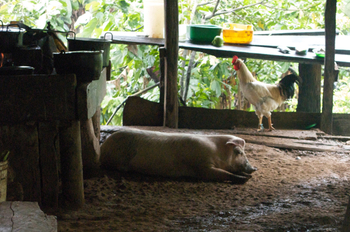
Three weeks without electricity wasn't the hard part. It was the pig and chickens in the kitchen, and the family of chickens next to my bed making grumbling baby chicken sounds beneath their mother's wings every time I moved.  It rains a lot at this time of year. They have to go somewhere indoors, and so does the pig that also made nocturnal grunting and farting sounds.  

I maneuvered to set up my bed in their quadrant. I was grateful not to have to sleep with the workers, or in a hammock over the rest of the family, or on the floor with the fleas.  When it is dark at 5:30 p.m. and the rooster crows at 3:30 a.m., it is a big deal where one spends that much time in oscuro. (Such a great Spanish word for darkness!).  

I chose to sleep with the animals rather than people. I could pop on my headlamp in the middle of the night and converse with my best friend, write in my diary, and work on translating a beautiful piece on the People of the Sierra Nevada, written by a Swiss priest in Spanish. The book was a gift to Asdrubal's father, the Governor of the Arhuaco for the past 20 years.  

The headlamp worked great until the moths started pecking at my eyes. I named the pig Wilbur in honor of Charlotte the spider. I developed deep compassion for him when people threw rocks because they didn't like where he was at the moment. He appreciated having his belly scratched. No one else was kind to him.

My decision to leave Asdrubal's farm ultimately became a question of clean water - well, clean in general.

words + photos by Eric Lucas


The bumper sticker that caught my eye was on one of those big, glistening, jet-black ¾-ton dual-wheel pickups that are never, ever driven by women. It was named after a horned beast. There was a gun rack on the back glass. Twin exhausts gargled fumes and dripped pustulence. A CB antenna rose skyward. The driver had on a tractor-company ball cap.

Amsterdam CanalThe sticker said, “Stop Global Whining.”

What was really strange was the location for this spectacle—the historic center of Amsterdam, right next to one of the city’s lovely canals.

Unbelievable.

I mean it—if you believed me, even for a few seconds, you have obviously never been to Amsterdam and were fooled by my fictional ruse, which I devised to make a point about the world and traveling around in it. This iconic ultra-American pickup, guzzling diesel like an old drunk, with the sticker sneering at global warming, would never, ever be seen in Amsterdam.

I actually saw it in Eastern Oregon, a beautiful place I happen to like. It’s got towering mountains, secret canyons, ancient trees, hidden stream valleys with songbirds in breeze-tossed willows. It has many fine residents; and also some who are under-educated and have never been to Amsterdam.

In Amsterdam, not only do people not drive around in massive pickups that could not be parked anywhere, bikes outnumber residents. There are twice as many bicycles in Holland as there are people. While its citizens use their own muscles to get themselves around, unlike monster-truck owners in Oregon, Hollandaise “whining” about global warming is actually alarm. Most of Amsterdam is below sea level.