The voice on the other end of the phone was exultant. “I’ve found a house exchange on Craig’s list. I’m going to Paris for two weeks. I leave in ten days.”

Nine Mornings of Christmas
by B.J. Stolbov
I’m startled awake by every dog in the neighborhood going off, howling and barking. I’ve never heard such an ungodly uproar. Nothing like this has happened here before. It’s pitch black outside. There are no streetlights in this neighborhood; there are no streets, only dirt trails out there. I roll over and look at my clock. It’s 3:30AM. I have no idea what’s going on.
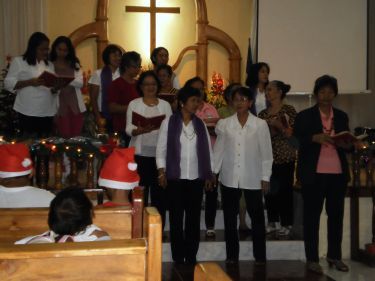
There’s a light on in the kitchen and my host Mother is up. She is boiling water, making herself a cup of tea.
“What’s going on?” I ask.
“Mass,” she answers.
“Mass?”
“Four o’clock mass.” She sits down. “The Catholics are going to church.” She sips her tea.
“At four o’clock?”
It’s nine days before Christmas. The Philippines is the only Christian country in Asia. Beginning this morning, December 16, the Christians will get up and go to early morning mass every day until Christmas. The Catholics have to wake up this early because their churches will be full and the mass will start exactly at 4AM.
My host Mother, sitting in her bathrobe, heating a larger pot of water for her bucket shower, is Protestant, a Methodist. For the next nine days, she will attempt to attend morning services at the much more reasonable hour of 6AM. And she invites me.
I’ve been living in the Philippines for a year now. I’m a 61-year-old male and, among other various professions, I’m a writer. Rather than retire, I’m way too young to retire and this writer doesn’t want to retire, I decided to join the Peace Corps. Now, I’m living a fascinating life with a Filipino family and teaching high school English in one of the most remote and beautiful provinces in the Philippines.
by Elyn Aviva
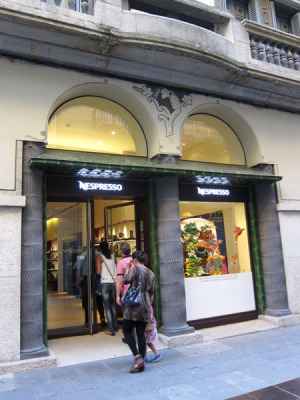 When we went for an early morning stroll in Girona, Catalonia, my husband, Gary, and I saw a group of well-dressed people standing impatiently outside a shop. We took a closer look and saw a storefront with impressive, fluted grey stone columns, large display windows, and imposing glass double doors. The merchandise on display was unusual: small metallic capsules in coordinated colors arranged in geometric designs. Emblazoned in glowing white letters over the doors was “Nespresso.” Nespresso? The coffee capsule brand?
The crowd grew increasingly noisy and impatient. We decided it was time to leave before they became even more restive.
I was puzzled. Who would want to purchase pre-made coffee capsules? It seemed neither cost-efficient nor ecologically sound. And besides, when you ran out, there was nothing you could do—except wait desperately for the Nespresso shop to open.
Returning from our stroll, we paused again at the shop. Nespresso was its name and luxury was its selling point. From our vantage point we could see inside. Slim young women in classy matte-black uniforms stood near the open door, gatekeepers into this exclusive club. People entered, sometimes showed a membership card, chatted for a moment discreetly, and then were ushered into this high temple of gustatory excess.
Secrets Of A Paris 'Plus' Shopper
by Dorty Nowak
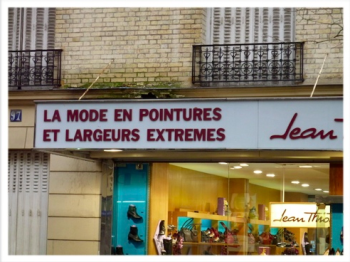
I skipped dessert today, which is not easy to do in Paris, where patisseries flaunt their delicacies on almost every street corner. I was on my way to my favorite bistro when I passed a store whose name caught my eye, “Plus Madame.” Since I’ve never seen anything “plus” relating to women’s clothes advertised in Paris, I stopped to look. A sign in the window informed me that the store specialized in sizes 42. 42! That’s a size 8 in the U.S. and a size 10 in the U.K., but in France, it’s a “plus.” Suddenly, so was I.

CHIAPAS, MEXICO: Maya, Mother Nature, and More.
Discover Chiapas, Mexico, through three unique perspectives. Judith Fein explores Maya ruins, culture, and traditions with archaeologist Yolanda Ruanova, uncovering the ancient and contemporary Maya world. Photographer Paul Ross captures the faces and landscapes of Chiapas. Ellen Barone embarks on a backcountry equestrian adventure with Enduro Ecuestre. Experience history, culture, and adventure in Mexico’s hidden gem.
I fell in love with my wife, Rahla, when I realized how much we had in common, including the name George Van Tassel, the grandaddy of UFO-ology.
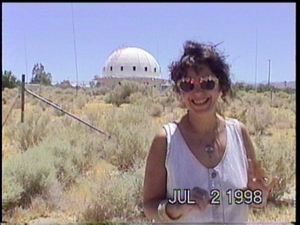
I remembered hearing him interviewed on a radio show about encountering aliens when I was growing up. But Rahla actually met him in the California desert near Twenty-Nine Palms. He showed her an alien landing site, which included a structure he built called The Integratron where aliens rejuvenated after a long interstellar trip; a UFO library and bookstore carved into the earth under the world’s largest freestanding boulder; and a luncheonette. She learned that Van Tassel had been Howard Hughes's partner, and they were going to build a landing strip for Hughes’s giant Spruce Goose fleet -- until the aliens showed up. They named the site Giant Rock Airport in honor of the aforementioned boulder.
Along with our wedding vows in Los Angeles, Rahla and I promised that one day we would visit the Integratron and Giant Rock Airport.
We moved to Scottsdale after the 1994 Northridge earthquake, but were forever driving back to Los Angeles. On one trip, we decided to leave early and fulfill our Van Tassel vow.
Traveling Back Through Time in Taos
Although Starr Interiors, the gallery that I’ve had for decades, has been housed in what was once the home of one of the founding artists of Taos, New Mexico, E.I. Couse, only recently have I gotten entranced with the history of the building. I’ve known about it, but it’s always been in the abstract. My deed was signed under the presidency of Abraham Lincoln, but the building which was originally constructed as a private home, existed long before that. I’d never given much thought to the previous owners and the part they played in the colorful history of Taos.
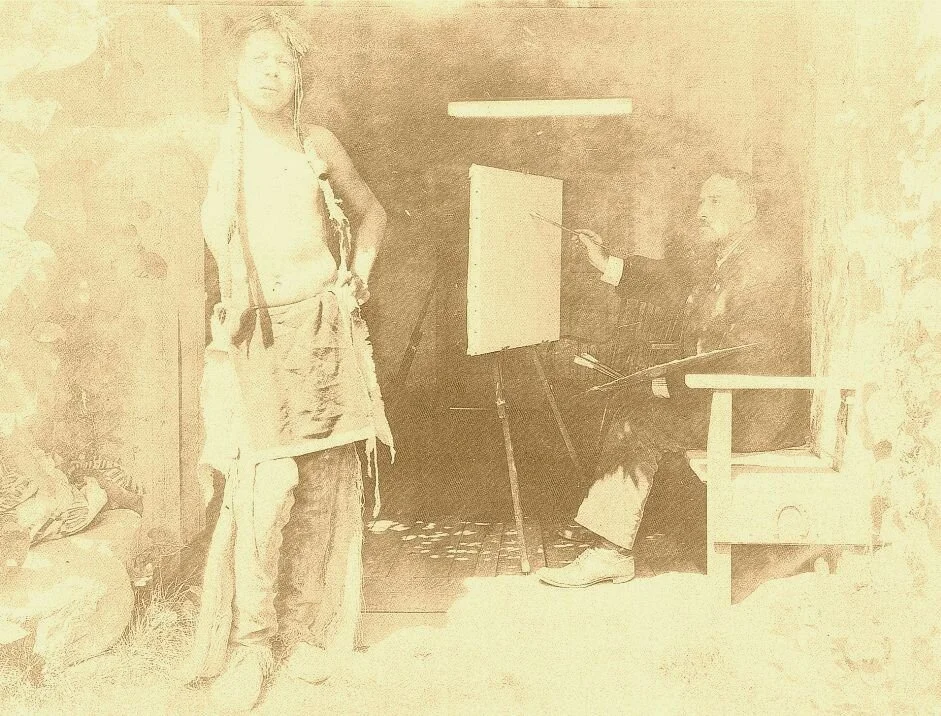
Since making a connection with Virginia Couse and her husband, Ernie Levitt, who have the Couse Foundation, I’ve become inspired to do some of my own research into this historic building. They’ve been good enough to provide us with some photos when Virginia’s grandfather and his wife, the first Virginia, lived in the house, from 1906-1909, calling it Las Golondrinas. It was there that her grandfather built his studio by opening up the roof and adding on what looked like a greenhouse to provide him with the northern light he needed to paint by.
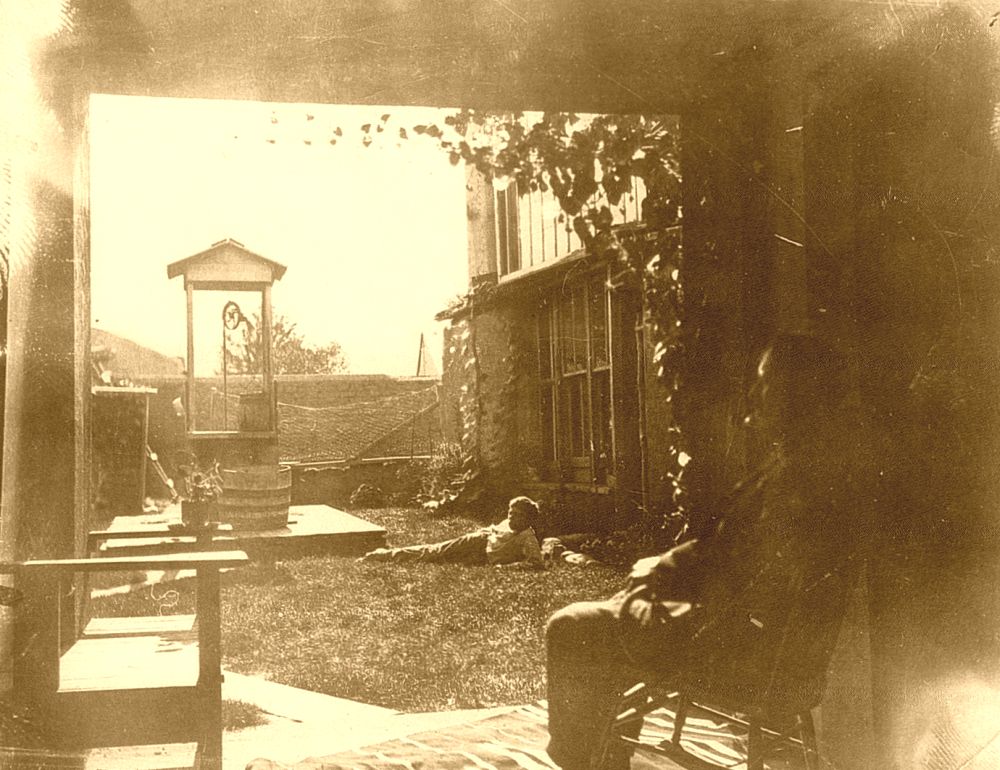
He also often painted in the courtyard. This courtyard was beautiful then, as now, and a photograph caoturs Couse sitting in the doorway at his easel with a handsome young model from the Pueblo standing in front of him. In another, we see him sitting in the courtyard on one of the rocking chairs with his wife stretched out on the grass, hollyhocks and Virginia creepers lining the sides of the courtyard.
What are all these tourists doing tramping around in these small towns, smashing what is left of rural life? That was my uncharitable thought when I returned to Ohio for a class reunion and drove up to Berlin (pronounced BER-lin ever since World War II) and Walnut Creek, and Charm. These little towns stand in the heart of Ohio's “Switzerland” – Amish country--and I was on my way to buy some locally made Swiss cheese. I came away with Swiss cheese and culture shock.
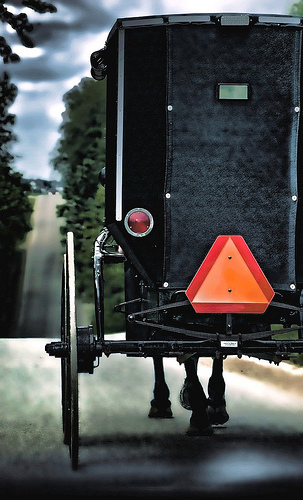 by leezie5 via flickr.comI grew up in Holmes County, Ohio. While not as well known as Lancaster Pennsylvania, Holmes County and neighboring counties are the homeland of the Plain People--the Amish and their slightly more permissive cousins, the Mennonites. Back when I was a child, we knew several things about the Amish. They wore mostly black. They managed excellent farms and if we wanted a cabinet built, we would look for an Amish carpenter. But mostly, our interaction with them was on the road. Because they do not drive anything mechanized, their horse-drawn buggies were a road hazard to our '57 Che vies and '60 Pontiac, frequently causing lines of traffic to crawl along narrow county roads.
On my drive in search of cheese, I enjoyed the gentle hills glowing soft green in the humid air. The Amish farms stand out with their sprawling white houses extended by additions piled on like a collapsed stack of children's blocks. Depending on the season, you may see a horse-drawn plow in the field, or geometric patterns of domed haystacks stretching across the fields. The countryside has a Grandmother-Moses-was-here look about it.
I chuckled as traffic slowed to a crawl and I stretched my neck expecting to see the familiar buggy that was blocking traffic. Except it was not a buggy. It was a tour bus. That is when culture shock set it.
Berlin was a tourist destination? BERlin? One of those small towns that we who grew up there could not wait to get out of, was now a magnet for day trippers from Cleveland and Columbus and Chicago? From my youth, I identified Berlin as a hopeless backwater, only important as a prime basketball rival. Among us girls it was famous as the home of a family of five boys--all tall, dark and incredibly handsome. I doubted that the tour buses were on their way to a county basketball tournament.

Jumping the Bull: Lies And Other Tall Tales in Ethiopia
I tell lies when I travel. My mother would call them “little white lies” and I only tell them to spare the feelings of others.
 Oh, alright. That wasn’t exactly honest. I tell lies when I travel in order to spare myself the piteous looks I receive when I tell the truth. A woman traveling alone is not as rare as it once was but, depending on where she goes, there is still a curiosity factor. The farther afield she wanders, the more curious the local folks will be.
“Where is your husband?” That is the first question.
Now, I never mind admitting that I am single – I am an optimist and the inquirer just might have some terrific friend I could meet. Of course, if I answer truthfully and admit to two divorces I could appear to be a poor risk. So I hang my head, and in a tragic voice, I whisper, “Gone.”
Which is not a lie, not really. They are all gone, those husbands.
I grew up in the jungle of Maui, barefoot, climbing trees, keeping geckos as house pets. A trip to the busy west side of the island was an all day affair. After a two hour dance with the narrow, cliff-side Hana Highway we’d arrive in Kahului where I was fascinated by the fluorescent lights and honking car horns. I’d sing along to the Ka’ahumanu Center jingle on the radio and the grocery store might as well have been Disney World I was so eager for the cheese samples, flower displays and rows of sugary cereal I might possibly convince mom to splurge on.
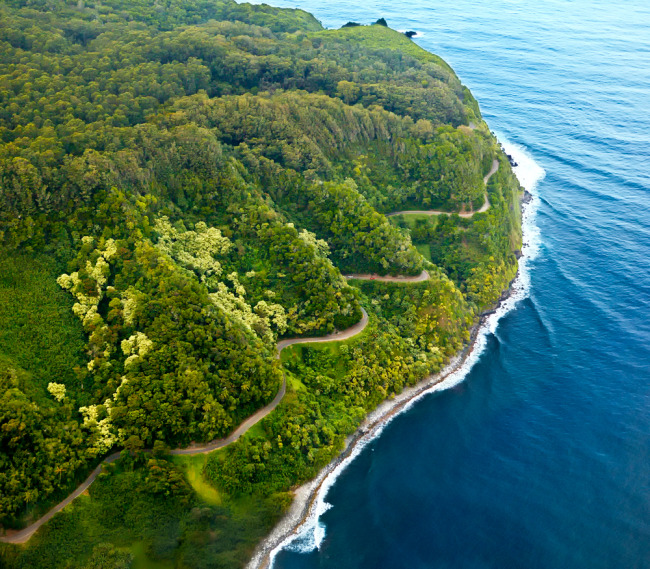 The winding Hana Highway
When I was nine, my family relocated to Maine where grocery stores weren’t so special and civilization was easily accessed just a few minutes down the road. I spent my teenage years still titillated at the mere mention of a trip to the mall as it seemed Maine never got the overdevelopment memo the rest of the country took to heart in the 90s. The closest mall was still two hours away; I’m a country girl.
Though I still live in Maine today, I at least have made it to Portland, the “big city”. I have had the pleasure of getting my traveler’s feet wet as I’ve grown out of my rural roots but when I returned to Maui in 2005, I was caught off guard—the visit was nothing like I expected.
by Elizabeth Weinstein
“If I have to hear one more time about that roast chicken your father had in Tuscany....” my husband says, shaking his head. He feigns disgust, but in truth my husband is amused at the way my family compares every meal we eat to some better meal we had once upon a time. And the best of those meals were always in Italy. The ‘roast chicken in Tuscany’ has become our tagline for the holy grail—the holy food grail.

My parents lived in Italy a generation ago and, culinarily speaking, came of age there. During our growing-up, my brother and I were lucky enough to spend a year and several seasons in that country of hot, meaty broths that simultaneously console and inspire; fresh spinach with warm, oily garlic; pan-fried steaks bright with lemon and salt; and tortellini alla panna that could make you cry.
But it is indeed the roast chicken that does a Marcel Proust number on me—or rather would, if only I could have a bite of that chicken I ate 45 years ago at a restaurant called Cecco’s in Pescia. Just tonight if I could have a taste of pollo al mattone, a fresh chicken flattened whole between two bricks and roasted crisp and succulent on a spit with—with what seasonings? Was it really only salt?—then I would remember what it was like to be five years old and travelling with my parents and my big brother from Lucca back to our temporary home in Florence. I would be able to feel again the warmth of being safe with my family and at home in a foreign country.
by Elyn Aviva
When we told an English friend that we were going to Wales for a few weeks, he looked at us with undisguised pity.
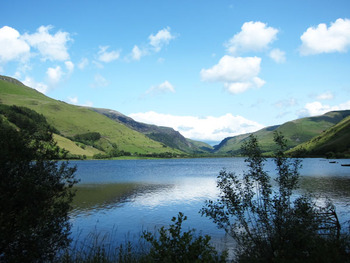 “Bring your own food,” he urged.
“Surely you’re joking!” I replied with a laugh.
He shook his head grimly. “Trust me. Bring your own food.”
I have celiac disease, and finding gluten-free (GF) restaurant food can be a challenge—even in countries renowned for their cuisine. I must stay away from wheat, barley, rye, kamut, and spelt in all forms, including bread and flour. What travails would await me in Wales, I could only imagine.
Filled with foreboding, my husband, Gary, and I headed off to Wales to do research for our “Powerful Places Guidebooks” series. Late at night we arrived in Cardiff, capital of Wales, and headed to our B&B. Actually, it was a “B” with only one “B”: bed. Our host offered us an alternative to a homemade breakfast: discount coupons for breakfast at the hotel across the street.
The next morning, we strolled over to the hotel’s unprepossessing side entrance, pushed the door open, and walked on faded carpet to the shabby dining room. Plates displaying the gritty remains of congealed eggs, burnt toast, and greasy bacon were piled on the tables. Hesitantly, we approached the barren breakfast buffet. The plastic cereal bins were nearly empty, and the bowl of fruit salad held nothing but a few wrinkled orange slices stuck to the bottom. Apparently, we had missed the early morning breakfast rush. Judging by the unappetizing remains, it was just as well. We began to worry. Maybe our friend had been correct about Welsh food.
 Don't you wish you had a travel expert who could help you plan the experience of lifetime? Someone who knows the best way to get off the beaten trail, has insider's information on the best places to eat, stay, sail, fly, have adventures, relax? A pro who can tell you what to miss, skip, what's not worth your time and money? The most wallet-friendly way to get away from it all?
Get your travel planning questions ready! Answering your queries in our new ASK A TRAVEL AGENT column is, Susan Kelly, a 25-year veteran travel agent, who has spent the better part of her life helping travelers plan memorable journeys and discover the world.
She has her finger on the pulse of worldwide travel, has access to exclusive deals for our readers, and we are thrilled that Susan is bringing her expertise and passion to our YourLifeIsATrip family.
We’ve experienced first-hand how Susan’s attention to detail, global resources, and industry connections can save you money, time, and emotional distress, but thought we'd start the dialogue with the question everyone is asking these days…
 WHY DO I NEED A TRAVEL AGENT? Hasn't the Internet made them obsolete?
by Jim Terr
I had lived in Santa Fe, New Mexico for 23 years before it occurred to me to offer to move back to Las Vegas, New Mexico (the “original” Las Vegas!), 65 miles east, where I was raised, to help care for my mom, aged 92 at the time.
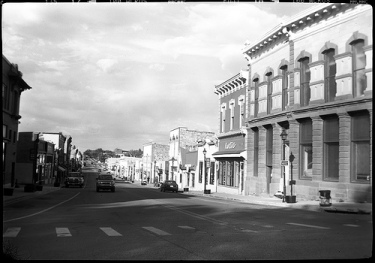 photo by jonnyphoto via flickr.comMy brother had been doing the honors (living with her, in her beautiful red-brick Victorian we were raised in) for a year, and I thought I’d offer to relieve him. My mom couldn’t believe my offer, recalling that a year earlier, when she had asked me if I’d like to move over there, I had responded “I’d rather slit my wrists.”
My suicidal reluctance had been due to my attitude that Santa Fe was fascinating, culturally alive, hip, filled with beautiful, interesting people and romantic prospects, whereas Las Vegas (population 15,000) was insular, uninteresting, provincial, stagnant.
As I was cleaning up to move out of the place I was living in, my ever-active songwriting mind was generating a beautiful tribute song about Las Vegas, my home town, perhaps as a coping mechanism, a reflection of my deeper excitement about moving back there despite my well-developed bad attitudes about the place.
Now, a little over six months since moving back to Las Vegas, I am able to see more clearly what a tremendous transition was involved in moving back – and in gradually overcoming the horrible attitudes I had developed about my dear little old home town.
by Eric Lucas
“So, how does it feel to be in your homeland?”
My wife, Leslie, looks at me inquisitively.
 Tindari by Leslie ForsbergWe’re visiting Tindari, Sicily, where the Black Madonna of Tindari hangs in a cool-stone basilica on an olive-scrub headland overlooking the Tyrrhenian Sea. Beside the Madonna is an equally ebony Christ hanging on a crucifix. Up the road is a theater used by Greeks and Romans; stone seats persist on a rocky hillside, 2,000 years after they were first set down.
“She is known as the ‘Black Madonna of the Orient’,” our Sicilian guide, Lita, explains about the sepia-hued sculpture in the basilica’s huge bronze altar. “That means ‘from the east.’ In this case, Byzantium. So many, many people have come through Sicily over the centuries.”
And many have left.
“I’m Sicilian,” I tell Lita. She raises her eyebrows, looks me up and down. I hope I pass inspection: oxhide skin; walnut eyes; bones like the old olive trees nearby. She nods.
“One quarter Sicilian,” I clarify. “My great-grandparents came from a village above Palermo.
by Sylvia Fox
For the past 10 years - more if you include summers - Michael and I have chosen to live what my parents would have called a 'bohemian life' that meant living with limited utilities, limited comfort.
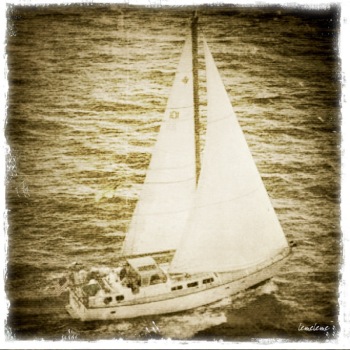 In 2000, we impulsively sold our home in Sacramento, California and bought a 48’ cruising sailboat with plans to unplug, untie and live a less traditional lifestyle. The impetus, in hindsight, was having our youngest child move out to go to college.
As I wiped a tear away while I said goodbye, my other thought was ‘My turn!’
And off we went --- sailing out under the Golden Gate Bridge, turning left and heading south until the butter started to melt.
But over the last decade, whether we were cruising California and Pacific Mexico aboard our 48' Maple Leaf sailboat, Sabbatical, or living in a home we later built in a rural surf village on a Pacific beach in Mexico or spending summers in our 100-year-old lake cottage in rural upstate New York, we found we had to constantly monitored our usage of what most Americans take for granted: water, sewage, gas, and electric. And garbage.
We had to know what we had, what we used, what we stored because of the lifestyle we had accidentally chosen when we stumbled into our grand adventure.
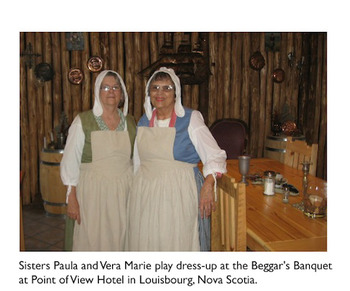 On our first trip together, we covered only a few blocks in a neighborhood of two-story white wooden houses in Columbus Ohio. I was pushing my sister Paula's stroller. (Ask her. She would no doubt say that I was always pushy.) At a few months old, she was oblivious to the great world around us--the bulbous cars parked along the street, the empty lot, dusty in the summer sun, or the brick store buildings up ahead on Cleveland Avenue. I, on the other hand, being ten years older, ten and a half when she was only six months old, I knew about everything.
As I walked, and she patted her chubby hands together, I daydreamed about how she would grow up with fond memories of her loving big sister and be eternally grateful for my attention and care. (Always about me, wasn't it, Paula?)
These little walks down the block were definitely not the only trips we took as children. Our parents loved to load up the car and go--most anywhere. Sometimes long car trips, sometimes just a drive down to the Scioto River for a picnic. On Sunday drives in the Ohio countryside, seeing the landscape between our father's salt and pepper crewcut hair and our mother's black bun, we would shout out “Go left” or “Go right” or “Go straight” at each interseciton--a kind of sibling Mapquest. It was a democratic route finding that our dad adventurously accepted. “Go” was the operative word.
words + photos by Rachel Dickinson
This summer while on a pilgrimage of sorts to Germany to see several Women’s World Cup soccer matches, I stumbled across something that kept me dipping into every cathedral in every town I visited. I discovered the appeal of the relic.
by Elyn Aviva
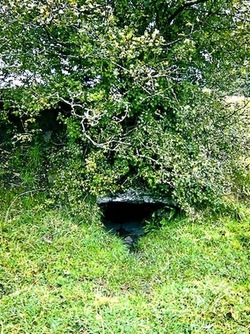 Even photos of the Cave of the Cats gave me the willies. I wasn’t going to enter it, not if you paid me. I was sure of that. My companions could go in if they wanted, but not me. We sloshed through the wet field to the entrance, a dark inverted triangle almost hidden by an overgrown thorn bush. A gash, a hole in Mother Earth. “No way,” I muttered, shaking my head. Jack, flashlight in hand, offered to go in first, and I watched him slither into the tight-fitting slit.
County Roscommon in western Ireland has a reputation for being boring, but it is anything but. The Rathcroghan complex has been a powerful place since the Neolithic, roughly 6000 years ago. It is an enigmatic landscape shrouded in myth, the burial place of long-forgotten heroes and the kings and queens of Connacht. It is one of the legendary “Celtic Royal Sites” of Ireland, ranking with the better-known Hill of Tara. Like Tara, Rathcroghan unites legend with history. It includes over 200 sites: ancient earthworks, tumuli, ceremonial avenues, ring forts, standing stones, the remains of a Druid school, holy wells, and caves. We’d come for the caves—one in particular, the Cave of the Cats.
Oweynagat (pronounced “Oween-ne-gat” or “UUvnaGOTCH”) or the Cave of the Cats is a spooky place, filled with powerful energies both of the earth and of the Otherworld. The Morrigan, Celtic goddess of death, destruction, and passion, is said to reside within.
by Jules Older
For travelers, some things are essential. Others should be left at home or not acquired in the first place. Here’s this year’s compilation of things you need and one thing you don’t.
The outdoors maxim, “Take nothing but pictures; leave nothing but footprints,” is where we’ll start.
TRAVEL ESSENTIAL #1
 If you're gonna take pictures, I've got a camera for you. It’s small enough to stick in your pocket, light enough to take on a mountain climb, cheap enough to let you pay your mortgage … and powerful enough to blow you away. It blew me away, and I'm used to great cameras in small packages.
The camera in question is the Canon PowerShot ELPH 100 HS. It weighs less than five ounces, fits in a shirt pocket, and costs less than $200. But its real strength lies in what it can do.
Video? Full hi-def. Sound? Impossibly good — doubly so for a camera with such a tiny microphone. Low-light capability? Still can't believe what I've captured in gloomy rooms. Zoom lens? Big zoom but loses sharpness when you really pull in that distant egret. Viewfinder? No, but you'd better get used to that. Like the typewriter or phonograph, the viewfinder is a dying species.
After testing the 100 HS on snow and off, in two hemispheres, I pronounce it the best small camera I've ever tried. And the best buy. www.canon.com
TRAVEL ESSENTIAL #2
From pictures to footprints. I've been testing two shoes — one made for walking and one for running. My first question: Does that designation really make a difference?