The Bosque Is For The Birds

words + photos by Laurie Gilberg Vander Velde


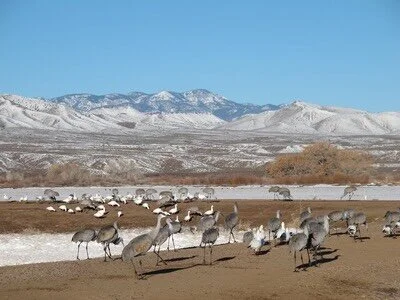
“Maybe I will go to the car and get my tripod,” I said to my husband.  We were at the edge of a mostly frozen pond, standing on snowpack, bundled up against the 19 degree cold in the pre-dawn dark.  A glimmer of light was starting to show in the sky.  We had staked out a spot in the line of tripod-wielding photographers with their mega-humongous lenses  We were all waiting for the awakening snow geese and sandhill cranes to perform their morning “fly out.”  We were at Bosque del Apache, a National Wildlife Refuge near San Antonio, New Mexico about an hour south of Albuquerque.  It’s a place known to many serious bird watchers who throng to the area in the winter to watch thousands and thousands -- and thousands of snow geese and sandhill cranes come and go.

We are not avid birders, nor am I a zealous photographer.  How could I be?  I love taking pictures and dabble in PhotoShop, but I tote a point-and-shoot camera.  It’s top of the line and somewhat flexible, but it’s still a point-and-shoot, and the SLR crowd look at me with some disdain.  Much as I would love to use a digital SLR and be able to change lenses, my body just can’t schlepp that much weight.  And my husband, despite my batting my eyelids at him, has turned me down flat.  It was hard not to be intimidated by the very serious looking phalanx of expensive equipment lined up on tripods waiting for “the moment.”

Our home is now in Santa Fe, so we made the easy two plus hour drive to the Bosque (means “forest” in Spanish) the night before, aiming to get there in late afternoon in hopes of seeing the “fly in.”  This is the time during the golden hour before the sun sets and the moments after sunset when tens of thousands of snow geese and sandhill cranes fly in.  A foot of snow had closed the refuge a couple of days before, but the plows had sort of cleared the roads.  The observation decks were still snow covered.  The big problem was that there were limited areas of open, unfrozen water in the ponds, and the birds want to land on open water where they are safer from predators.  The helpful folks at the visitors’ center can tell you where the birds landed the night before, but the birds don’t file a flight plan, so we can only guess where they might land tonight.
Hunting Higdens in Newfoundland

by Jane Spencer

With no documentation or living family left to question, it seemed a long shot to trace my grandmother’s roots in Newfoundland. My father used to say his mother was from Harbour Grace, that she worked ‘in service’ there. My aunt said no, she was from Salmon Cove or perhaps Trinity.  My internet search was proving futile. Without my grandmothers’s birth certificate, birth date, baptism records (which apparently burned in a church fire) or even childhood photos, I didn’t have much to go on. I would have to travel to Newfoundland & Labrador to see what I could dig up, and I would take along my favourite chauffeur, my husband John.

My ancestors emigrated to Ontario from Newfoundland about a hundred years ago. My grandparents George Spencer and Elfreda Higden were both Newfoundlanders, as were their parents and grandparents before them.  George died at age 50, but Alfreda lived on to age 83, spending her final days living with us in her ‘granny suite’.  I decided to focus my genealogical search on her.

Here’s what I was told about my grandmother. She was a staunch Methodist, she loved the monarchy, and her deafness was caused by a childhood case of diphtheria. This instilled in her a suspicion and a fear that others were always talking against her, and it gave her a crabby edge. She fought with her husband incessantly.

Here’s what I remember about my grandmother. Into her eighties she weighed about 100 pounds and kept her grey hair curled up in bobby pins day and night.  She could lipread from across the room, and she squinted her eyes and shook her cane if she didn’t like what she saw.  She had these strange expressions like “Stay where yer at, and I’ll come where yer to” and “Mind yer mouth.”

One day, I was deadly embarrassed to catch Elfreda in her raggedy fur coat hitchhiking near our house in the suburbs down to the mall.  I ran in to tell my father, but all he said was: “You know she’s from Newfoundland” as if that explained everything. I supposed that Newfoundland was like another country, where they did things differently.

by Susanna Starr

It started out with a scant breakfast (have you ever tried a one egg omelet?) and miles of walking around the city streets of Quito in Ecuador wearing wedged sandals instead of sneakers. Wedged sandals are not the shoes of choice when traveling. My feet, already aching, were really in a state of extreme protest, a not too subtle indication of the agony to come. We were on our way to visit the art exhibit we’d been anticipating all day, but hadn’t quite left any time out for either lunch or water.

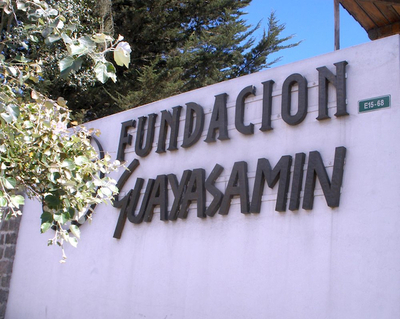
The Guayasamin Museum was our destination and surpassed all our expectations. The paintings and sculpture were impressive and the house in which they were displayed, splendidly representative of the Ecuadorian painter’s era (1919-1999). The original house had an extensive collection of pre-Columbian art he had acquired over decades. The only downside was that there was no place to eat! Our dilemma was if we were to start searching for a restaurant, there wouldn’t be time to get to Guayasamin’s Capilla del Hombre (The Chapel of Man), which was a “must.” By now it was a toss-up as to which was worse, my overwhelming hunger or my throbbing feet.

We decided to skip the restaurant search and walk to the Capilla which, we were assured, was just a short distance away. We simply couldn’t take a chance on missing the experience of visiting this most amazing structure, Oswaldo Guayasamin’s final dream, completed three years after his death as a tribute to the 500-year struggle of indigenous people of the continent. 

words + photos by Jolandi Steven


In the pursuit of progress, the past is often overlooked, neglected, discarded or forgotten. 

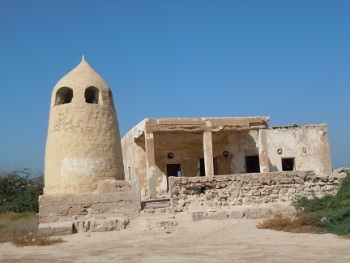
But to me, it holds an allure that is enticing, charming, mesmerizing and utterly seductive. Not so for everyone: When I first mentioned the abandoned village of Al Jazirah Al Hamra on the outskirts of Ras-al-Khaimah in the United Arab Emirates to my husband, he evinced his non-committal with a shrug of his shoulders.

Thanks to Google, I learned that Al Jazirah Al Hamra means “Red Island,” and before the discovery of oil and subsequent land reclamation that linked the old town permanently to the mainland, it was on a peninsula that, with high tide, became an island. The questions puzzling me were: “Why did the people abandon their homes?” “Where did they go?” 

The Ghosts of Alamos

story and photos by Paul Ross


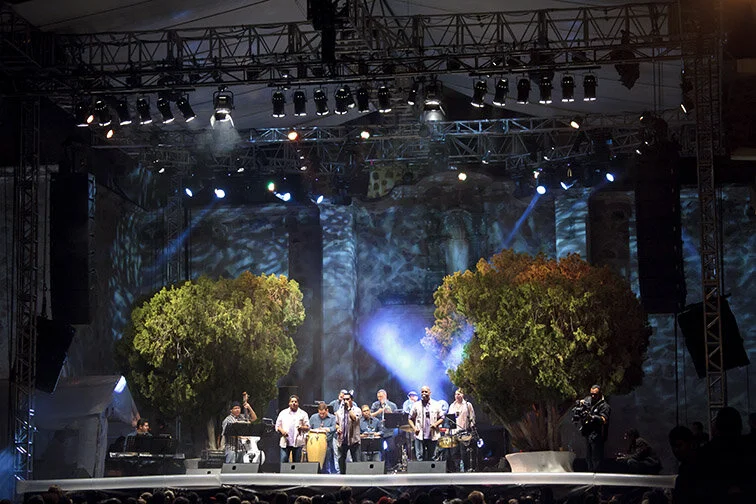
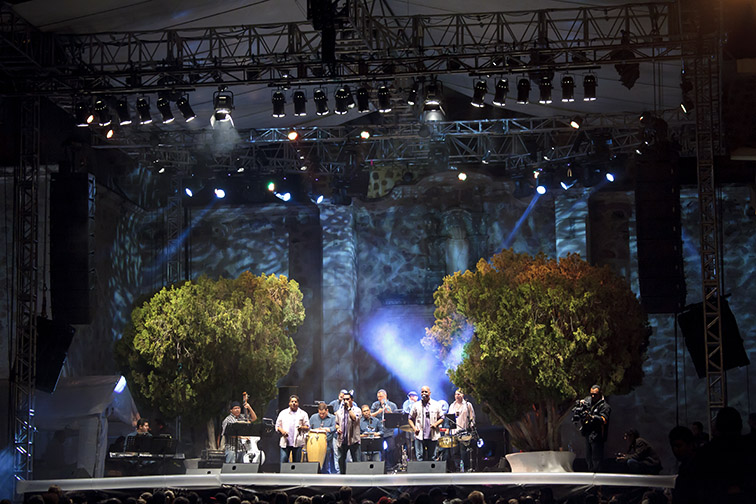
A Puerto Rican band rocks the house on one of Alamos' festival stages.
Ever since I was a kid, I liked ghost stories. Not “the hook on the car door in lovers’ lane” or “the vanishing trucker” or any of the urban legends. I sought out the real thing: incidents that were chronicled in books by the likes of Jess Stern, with detailed footnotes and reports from reliable witnesses such as cops, soldiers and, my personal favorite, dumbfounded scientists who were “left at a complete loss for explanation.” Years later, “The X Files” mined similar territory but, by then, I’d moved far from any fiction into field research. I’d contributed to esoteric –yet rigorously grounded- publications like “The Fortean Times – The (British) Journal of Strange Phenomena.” I interviewed people who’d had supernatural encounters, personally photographed numerous haunted spots and even stayed in what was purported to be America’s most ghostly hotel. (2 nights: I saw nothing and left dispirited.)

The funny thing is, even if the prey is ghosts, when you’re actively hunting them, they’re nowhere to be found BUT, when you least expect it -

Recently, I was on assignment in Sonora, Mexico. I’d never been to the specific region and was looking for culture, music, cuisine, genuiness and exotica. I didn’t know I’d find my passion.

by Kimberley Lovato 

Here’s what I did before sitting down to write an article today.

I got a fresh cup of coffee. I re-read an assignment I had for school, and then printed it out (perhaps it looks less ominous on real paper). I looked online to see if airfare to Europe had come down at all. I asked my daughter what she thought she was good at, then what she thought I was good at. “ You’re good cook. And you’re good at writing.”  Oh yeah, writing, I need to do that today. But first I sorted laundry, made the other half of the bed, and wrote out a grocery list, the latter task being somewhat auspicious. I did write the grocery list after all.  I patted myself on the back.

Yes, I am a good mom, and a good cook, and I’d like to think I am a good travel writer (I’m certainly good at traveling). But what I’m really expert at is procrastination (gasp), or what I like to call, my Inertia Games. 

Newton’s Law of Motion says, in some form, “In the absence of force, a body at rest (mine for the sake of argument), will stay at rest, and a body moving at constant velocity in a straight line continues doing so indefinitely.” Inertia. Inactivity. Yawn. In non-physicist English this means that until a fire is lit under my ass, nothing is going to happen. The game becomes discovering the flame that will light the match.

Why do I procrastinate? I know there are a lot of you who think you know the answer. If I had announced this at a dinner party, there’d have been hushed whispers behind the backs of hands, and maybe some pointing too. “That’s her, the procrastinator. She’s lazy. But nice shoes!”

The journey of a lifetime

by Eric Lucas

Peter T. Lucas, 1931-2012

There’s never enough time.

My hero lay in bed for his final journey, the trip we all take to who-knows-where. I sat beside him and took his hand for the last time. His palm was dry from a day of heat and sweat, now cool to the touch. His breaths thrust out in fierce exhalations, little drawn back in return. This is called Cheyne-Stokes breathing. It comes very near the end.

His nurses had promised he could hear us, so I told him everything that mattered—how he saved my life and shaped its meaning, how what he stood for was living in us and would pass on to those coming still, even those just born. I’d make sure of that.

words + photos by Barbara Aman

We arrived late at night at the field office of the nonprofit, a crumbling cement structure with a few rooms and a few rusted bed frames with torn, flattened pads. I was here to document the progress of a multinational water-supply project in this drought-challenged desert region in India’s western Rajasthan state. No luxury hotel here.

Up before sunrise the next morning we first visited water catchment areas, where large areas were dug out a few feet down, the women wielding picks, the red dirt transported away with beat-up metal bowls by all available family members--typically grandparents and grandkids, who often worked together. The elder male stood at a distance, dressed in white--as if a maharajah from the past, leaning against his wooden cane--while the women, dressed in brightly patterned red saris, toiled behind him.

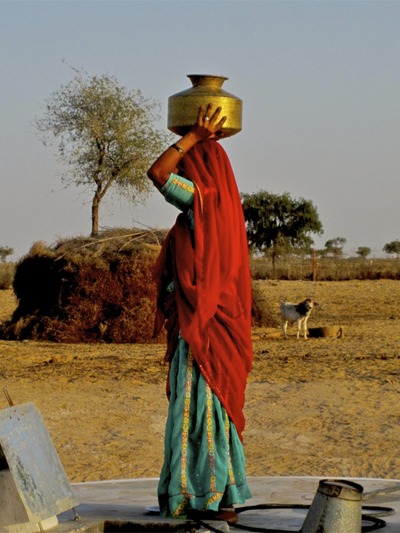
It’s the women and girls who are most affected by the water shortage here. Many in the villages spend up to five hours a day walking to and from the closest well or storage tank, carrying water in their beat-up metal pitchers. Water for drinking, cooking, washing--it falls to them to fetch it, however far away it may be. Male/female roles are strictly cast here: Whatever it takes to keep the home and family running, it’s up to the females to get it done.  At one point, Michael, my partner, had teasingly picked up one of the full water containers and placed it in my arms, and my legs almost crumpled. I could not imagine how these tiny women could carry these on their heads.

The next stop was a completed water catchment and storage area and as we drove up I could see the bright white paint job on the 12-foot round tank, jutting up about 2 feet from the ground, the lower half nestled tidily in the hard clay soil. A young woman stood atop it, quite shyly, covering her face with her tattered sheer sari while balancing her metal water jug adeptly atop her head. Her eyes seemed to bore through me, even in their shy state.

by Irene Lane

It started out as an experiment. Would I be able to travel with my six-year-old son, mother, and two aunts to a small Aegean island and actually be able to shoot a short documentary film about its ecotourism efforts in a week? The Greeks are known for many things – love of life, great food, proud history and genuine kindness, but they aren’t necessarily known for sticking to a timeline.

However, after a summer when the world was served numerous news stories about Greece’s near economic collapse and violent riots, I viewed it as a chance to both spend some special time with my family and shed some light on a little known good news story. Little did I suspect that the travel experience would energize me, educate my son and change a tiny island’s conservation funding prospects.

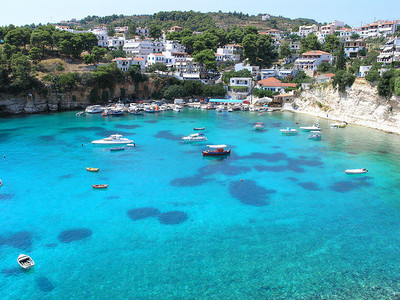
They certainly don’t make it easy to get to Alonissos. All told, the journey from Athens took two hours by bus and another three hours by boat – all of it extraordinarily scenic. We passed by some very picturesque islands including Skopelos (where the movie Mamma Mia was filmed) and, as we made our final approach toward Alonissos, some surprisingly choppy seas that reminded me of the movie Castaway, where the island was protected by a band of rough seas, yet also disconnected from the rest of the Aegean Sea.

The Philippines: New Life, New Priorities

by B.J. Stolbov

Mortgage, insurance, car, cable, gas, electric, water . . . drowning in bills, bills, and more bills . . . money going out and out . . . oh, what to do. . . . What to do?

Two years ago, I joined the Peace Corps. I sold or gave away most of my stuff. (Don’t worry: stuff is replaceable.) I took a suitcase and a backpack, a whole lot of trust and my little bit of courage, and I moved to the other side of the world.

Now, I have two suggestions for you.

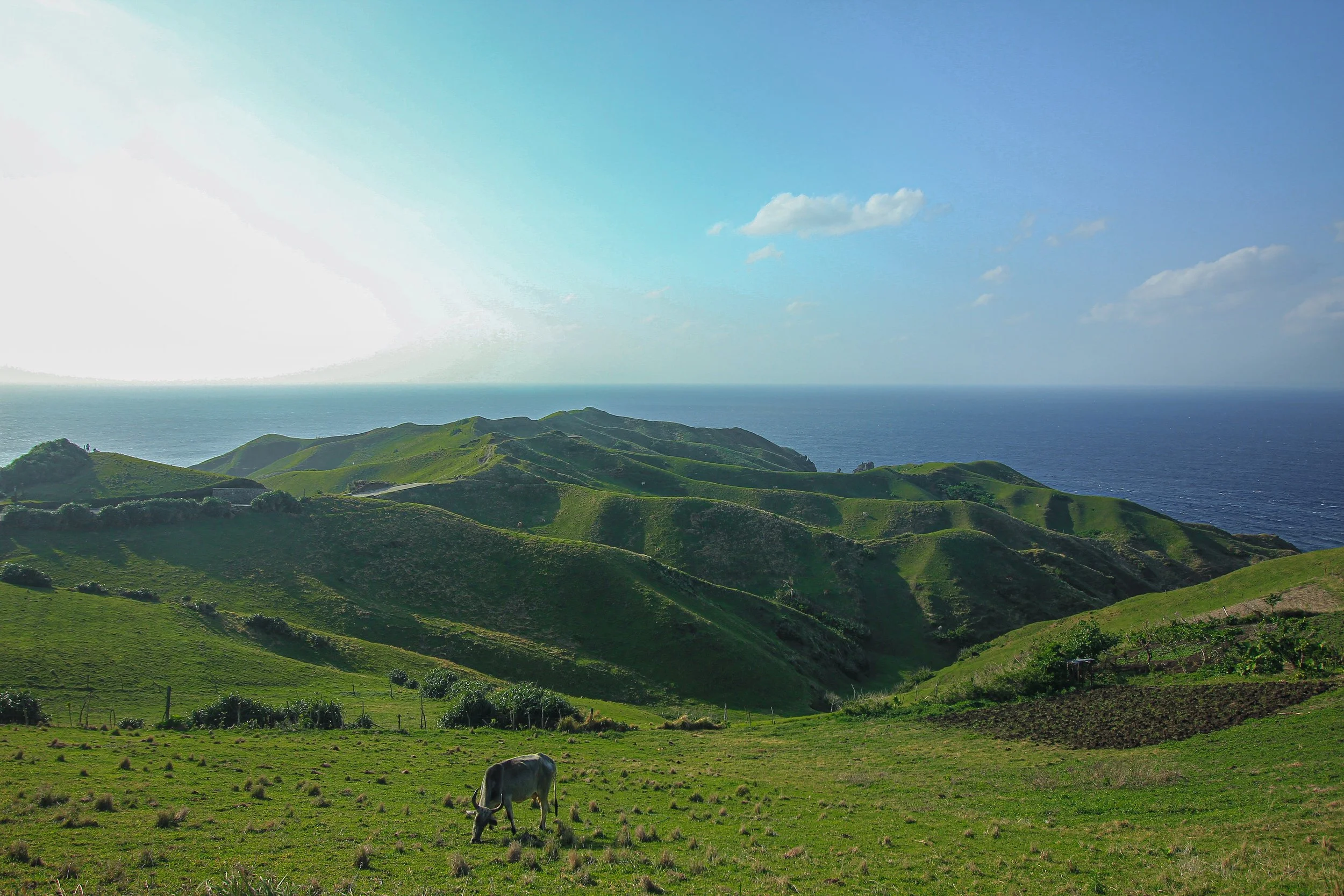
Suggestion #1: The Philippines. I live in northern Luzon in a beautiful province called Quirino. It is a quiet, peaceful, rural province. The place reminds me of Northern California, only with palm trees and fresh bananas. The people here are warm, friendly, and hospitable. (Hospitality is THE cultural trait of the Filipinos.) The Filipinos will invite you their homes and will treat you like family. You will not go hungry here, we eat as often as six times a day, and the food is simple and good. The living is relaxed and basic.

Leaving It All Behind

by Susanna Starr

To the outside world we had a beautiful life. There we were, living happily with our children in our lovely suburban home. We had interesting friends. What would possess us to leave it all and hit the road? But that’s what we did, launching ourselves into points unknown in the big red truck we bought to replace the suburban station wagon. It also replaced the 4 bedroom 2-1/2 bath home with a cab-over camper that provided just enough space for five people to sleep. Only one person, even if it was a child, was able to walk about at a time.

What we had in mind was simply to begin our personal odyssey with the ultimate destination unknown. Anyone can do it. Despite the prevailing opinion, it doesn’t take much, just the initial decision to find another way. That’s how the travel plan began. Leaving all the details open allowed us to experience adventures that we never could have conceived of. That’s how the travel plan unfolds if you make the space. Our previous lives were now lost and gone forever and we had embarked on a new one.

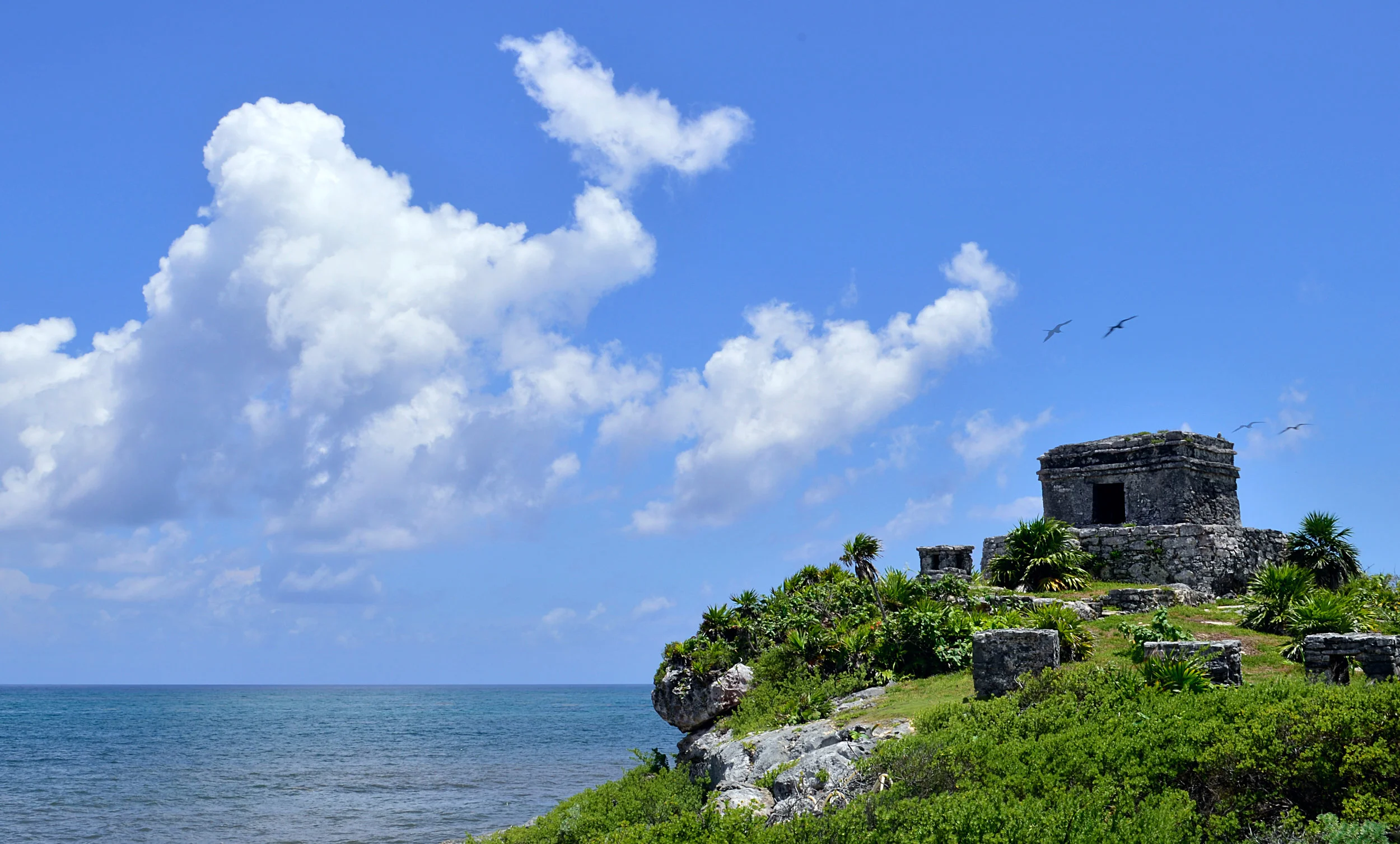
This one ultimately took us from suburban south shore of Long Island to the sparsely populated area of the Yucatan Peninsula of Mexico. Not one of us spoke Spanish, but we ended up living there for several months, most of it on an isolated beach, on what was later to develop as Playa del Carmen.

by Fyllis Hockman

As a travel journalist, I’m fortunate enough to travel the world, reveling in a multitude of life-enhancing experiences that I would never otherwise be exposed to. I then get to come home, kicking and screaming, and write about them, usually dispensing with facts and focusing instead on my observations. After a recent trip to Shandong Province in China, I had even more observations than usual and was motivated to record them before even thinking about the article I would ultimately write. So here I’ve blended the personal with the professional—and they are indeed more personal than professional—in the hopes of sharing with you my private reactions to that recent trip.

Once a country of thousands upon thousands of bikes, gray-green clothes and propaganda signs everywhere promoting Mao Tse-Tung, the glories of socialism and China’s one-child policy, China now boast 6-lane highways full of traffic, bright Western high-fashion dress and advertising promoting Sony to Gucci to Prada to Ferrari to KFC and Starbucks, of course, and even 7/11s. What not long ago were farming villages are now bustling urban metropolises with legions of skyscrapers and high-priced  condominiums . China has not only come into the 21st century but is forging ahead of most other countries into the next.

After 10 days and nights with our 30-year-old young guide and mother of a three-year-old, we became such close friends that we were walking down the streets with our arms around each other. A strange and wonderful relationship forged so quickly.

Many Chinese prefer drinking just plain hot water to anything else – and everything is served warm, from water to soda to beer – especially beer.

Despite all of China’s progress, Western toilets have not really caught on except in the better hotels. Everywhere else, at attractions and restaurants, treadle toilets are the norm—more often than not, without toilet paper. You think you get used to them—but you don’t really.

by Caren Osten Gerszberg

I am married to a man who loves to compete. He is long, lanky and as strong as an ox. Much less competitive but also athletic, I have shared many challenges by his side for more than two decades—from running and cycling to rock climbing and skiing. While he strives to win, I just want to sweat, stretch and inhale some fresh air.

Every year since our wedding 21 years ago, we’ve celebrated our anniversary with a trip—like biking in Croatia, skiing in Park City, Utah, museum and pub hopping in London, and golfing in Hilton Head, North Carolina. As soon as each trip is over, I start thinking about our next springtime getaway—a rare chance for us to have extended time together, away from our three beautiful kids and the stresses of daily life.

When it was time to plan last year’s trip, I was intrigued after hearing from a friend about Esencia, a small 29-room resort on Mexico’s Riviera Maya. I love Mexico not only for its food, climate, and culture, but it also makes for an easy trip—a non-stop flight from New York to Cancun, and then a one-hour drive.

Once the beachfront estate of an Italian duchess, Esencia is a 50-acre white-walled property that looks out over the Caribbean. It is a peaceful oasis with two pools, a day spa that uses ingredients like juniper berries and rosemary grown in its on-site garden, and a welcoming open-air restaurant called Sal y Fuego. 

But what really grabbed me was learning that Esencia offered yoga—every morning, free of charge, outside in the open air.

This was my chance. A rare opportunity for my point-scoring, lap counting, time-keeping husband to perhaps let down his competitive edge and try something that would greatly benefit his body—and soul.

PLANE TALK: GOT A QUESTION? ASK THE CAPTAIN!

Do you have a question about airline safety, flight etiquette, jet lag, or air travel in general? Submit your question and look for answers in a future column.

by W. M. Wiggins

" I am curious about those DOT/FAA Improved Pilot Crew Rest Rules. Can you tell me what they are?"   


I see you are wondering what’s different, so here are the main Federal Aviation Administration changes: 

  • ON DUTY HOURS: 9 to 14 per day
  • INCREASE REST PERIOD BY 2 HOURS
  • PILOTS CAN SAY THEY ARE FATIGUED

Will these rules help?

And, if they do, will the flying public be willing to pay for the extra costs that will be added to their airline tickets?  

Before answering you,  here is a little background on just some problems associated with pilots flying in a diminished capacity….like ah….”sleep flying”.

You laugh?

If only it were funny. 

by John Lamkin

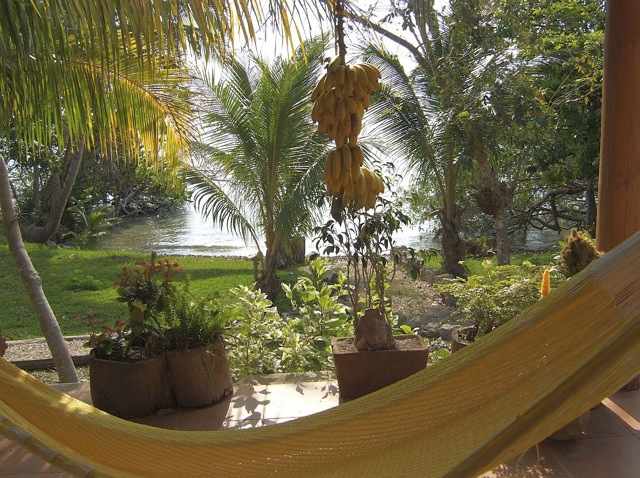
Sitting here watching the sunrise on the lagoon—Laguna Bacalar--I recall the time we arrived by canoe at the little cove here and decided that this would be an excellent spot to build a house. It was covered with scrub growth, weeds, some trees, coconut palms and the jungle was trying to reclaim it. Now, looking from the terraza of the house, it looks manicured, with lawns, flowers, intentional landscaping and the jungle held at bay. We had the house built by a Mexican architect friend with the unlikely name, Shiva. It's small, sets back about twenty meters from the water and has views of the Laguna from every room except the large bathroom which has its own indoor garden. It took awhile to manifest after the canoe ride, some looking at other places in Mexico, but it happened. It helped that it was on part of the land we already owned.

It seems there comes a time in a man's life when he has the strong urge to build, maybe something for 'posterity'--to make his mark on the land. I found locations for two other homes in somewhat the same manner as the Laguna house. The first was what they called a 'camp' in Nova Scotia. Back in California, where I came from, it would be called a cabin. I bought the 149 acres sight unseen.

Get your travel planning questions ready! Answering your queries in our new ASK A TRAVEL AGENT column is, Susan Kelly, a 25-year veteran travel agent, who has spent the better part of her life helping travelers plan memorable journeys and discover the world. 

She has her finger on the pulse of worldwide travel, has access to exclusive deals for our readers, and we are thrilled that Susan is bringing her expertise and passion to our YourLifeIsATrip family.


I retired last year and I’ve got my bucket list ready, but I feel so guilty traveling when many of my friends and extended family members are suffering in this sour U.S. economy.  Should I stay or should I go?

Yes! Go! I can’t think of a better way to spend your hard-earned retirement dollars. But, if you’re looking for a way to assuage your guilt AND help the economy, have you considered traveling locally?

Recently, a couple of random events inspired me to think about the benefits of U.S. based travel. First, a pre-holiday news segment with Diane Sawyer challenged a Dallas family to cut expenses and boost the economy by restricting their Christmas purchases to one American-made present. The premise was that if enough people did this, we could create 200,000 jobs for Americans. I don’t know how the statisticians arrived at those figures, but it got me thinking about how I spend my travel dollars.

by Maureen Elizabeth Magee

Since childhood, everything about Japan has enthralled me: food, traditional clothing, bonsai trees, ikebana floral arrangements and, of course, the people themselves. The poster in the window showed verdant, bucolic rice paddies being tended by women in traditional bonnets and straw hats. For dramatic relief, a snowcapped mountain hung in the background and the caption promised that I would “See the real Japan. Become immersed in the mysterious Orient by cycling the back roads of rural Shikoku – an island that outsiders rarely visit.”

It took about a nanosecond for me to walk into the travel agency and pay a deposit.

Meeting the Buddha in Sedona

story + photos by Suzanne Marriott

My husband was lying in the hospital bed, dying. It wasn’t as if I should be surprised—he had been in and out of hospitals many times that year, suffering from complications of multiple sclerosis. Yet, I was. I was in shock.

I had been his caregiver for the last ten years, and now, at the time of his death on January 1, 2006, I couldn’t stop. I still had to take care of him. Less than a minute after he drew his last breath, I began reading a Tibetan Phowa, or prayer, to Amatabha Buddha to guide Michael’s transition. It was a long and beautiful poem that guided him as he experienced the stages of death and the many levels of transition. Amitabha is a Sanskrit word that literally means boundless light and boundless life. He is the Buddha in the Land of Ultimate Bliss (Pure Land), in which all beings enjoy unbounded happiness. He can provide a “short cut” to enlightenment. By reading this phowa, I felt still connected to Michael, still able to care for him.

Nearly six years after my husband’s death, I hardly expected to meet Amatabha Buddha again in Sedona, Arizona, and this was not the only surprising thing that happened there.

story and photos by Rachel Dickinson

A week before what would have been my parents sixtieth wedding anniversary I found myself heading to Quebec City and the Fairmont le Chateau Frontenac, the very hotel my parents stayed in on their honeymoon. I believed, at the time, that this was strictly coincidental, for I had no desire to recreate the beginning of a failed marriage, but a part of me also strongly suspected that there was no such thing as pure coincidence.

by Cinelle Ariola Barnes


I had been struggling with my prayer life, figuring out where and how I could have some peace and quiet in the Big Apple. I tried to petition and call on God, but the words wouldn't come. I wondered, “If a city never sleeps, how does it ever dream? How do its people ever come to a solemn state of rest?” My father, a Christian of no particular denomination, suggested I visit a mosque and learn from the Muslims. 

“Watch them pray,” he said, “Their discipline and devotion is admirable. Watching them pray at the exact same time every day was one of my favorite things about living in the Middle East.”

I say I am a well-traveled Filipina, but that only means I have made countless layovers on flights to and from New York. The most traveling that I have ever done is through reading books, therefore I have great expectations of places I have yet to see. I hear “India” and I think saris in vibrant colors, citrus rinds covering a plate of curry, or yogis in lotus position. I hear “Rio de Janeiro” and I think futbol, futbol, futbol!

When I hear the word “mosque,” a flipbook of ideas, images, sounds, and even smells pop into my head. I let my mind cruise through this Rolodex as I sit in the Pelham-bound 6 train. Here I am, a young Protestant raised in a Catholic country, managing all the thoughts sweeping through my head as I near the New York Mosque. I straighten my spine and fix my hair as I get off the train, forcing myself to be, or seem to be, more reverent than I usually am.