My husband, Gary, and I recently went to Cornwall to walk meandering paths with a small group. At least, thatwas the story. One morning over breakfast at Rosemerryn House in Lamorna Valley, one of our group revealed she is a professional storyteller. She described learning to take storytelling seriously. “After all,” she mused, “We don’t usually think stories are important. At least, not in the real world.”

I realized that often the word “story” is used as a code word for “false.” As in: “Oh, that’s a likely story! You don’t really expect me to believe you, do you?” Or it’s trivialized to mean something soothing, as in, “Tell me a bedtime story.” Of course, a story is much more than that: it is how we make meaning out of our experiences—as in, “telling the story of my life.” Sometimes I identify so much with my story that instead of me telling “it,” it starts telling “me.”

 

I used to be an extrovert.

Now, I consider myself an introvert with some extrovert added to the mix. I have a hearing loss. One ear is deaf and the other partially deaf. I feel like I have an invisible veil separating me from others. 

Two years ago, after struggling to hear with friends, travelers, servers, family, salespeople,I checked into getting hearing aids. Each time, I felt frustration as technicians told me: “they should work.” They did not work for me. It began a path towards partial isolation and frustration.

I visited specialists at Kaiser, my medical group After test results, my doctor said, “You have a brain tumor which has damaged your auditory nerve."

“Hearing aids won’t help.”

“What?” My mind raced to thoughts of my grandfather who died of brain cancer. The doctor continued, “Good news: it is not cancer. Bad news: Permanent hearing loss with residual symptoms.”


Pendeen Fogou wasn’t a very prepossessing site. To reach it, the three of us—my husband, Gary, our guide, Cheryl Straffon, and I—had to unfasten three rusty metal gates to venture ever deeper into a farmer’s cattle yard. The broken concrete beneath our feet was covered with several layers of dried (or drying) cow manure. Cattle were lowing and resting in their own muck in the nearby pens. 

Our goal was a six-foot-tall stone structure with tall grasses and weeds growing out of the top and a yawning opening in one wall. Before we could enter the site, we had one more obstruction: a detached farm gate, which the three of us hauled over to one side. 

Bending low, we followed Cheryl down a steep, stone-lined passage deep into the earth. I was grateful I had my hiking staffs to help keep me from slipping. At the bottom, the rocky passage leveled out. My flashlight illuminated moss-covered granite walls and ceiling, the large stones carefully placed to construct the fogou. Pronounced “foo-goo,” it’s a Cornish word that means “cave,” and it refers to a human-made underground cavern.

Explosion on the Mountain

It was a gorgeous day for a hike--sunny, blue skies, comfortable temperature-perfect hiking weather. F suggested we hike up to the summit of the 12,000’ peak, taking our time, enjoying the profusion of wildflowers that had suddenly emerged after the night’s rain. She was used to hiking at lower altitudes, so we stopped whenever she needed to catch her breath or eat a snack. We climbed in companionable silence, finding the meandering path up to the top with no trouble.

Almost as soon as we started eating, it began to rain. We put on our rain gear, packed up our food, and started hiking down the mountain. The temperature dropped. Balls of hail mixed with the rain. Rivulets of water poured down what we thought was the trail.

Suddenly she screamed at me. “I’m not doing this anymore. Why do you always have to hike? Why can’t we ride bikes? This is dangerous!”

Deep in the barren Sonora Desert of Southwestern U.S, three days away from the last person I saw, I was hiking alone, in search of quiet. The desert has always been the one place that spiritual seekers, saints, and sinners have gone in search of quiet. 

Sonoran Desert, Prima, Arizona. Photo by Ken Bosma via Flickr CCLExcept that, in reality, the desert was not quiet. Its incessant winds whistled by my ears and rumbled up through my feet. Dead and dying grasses tumbled and rolled by.  Snakes slithered, lizards clicked, and hares scurried across the sand. The winds sang beneath the wings of hovering vultures and under the claws of lingering thoughts.

There, hiking alone through the desert, reveling in my own silence, late in the afternoon on a tranquil summer’s day, I suddenly came upon a rattlesnake, which startled me with its rattle, louder than any rock concert I had ever been to.  I stopped, the snake did not strike, we stared at each other, and then we both quietly went our separate ways. 

Sound and silence can come in unanticipated places and at unpredictable times. 

If you travel, you will have dumb days. That's a given. You’ll get on the Metro, but on the wrong train, and you’ll end up at the wrong end of Paris. You’ll order dinner in Tokyo, and with a flourish, the waiter will set what appear to be raw snails in front of you. You’ll book a hotel in Miami, and when you get there, discover that the elevator hasn't worked since the Nixon administration. These are dumb days. They will happen.

The trick is to avoid VDDs — very dumb days.

I just survived one. Barely.

Jules’s Very Dumb Day began in our hotel room in Luxembourg City. We’d been here a week, a week of nothing but sunshine and warmth. Okay, maybe I'd grown cocky about the weather. 

Now, we were heading north to Vianden, a town of winding, cobbled streets; an ancient mountaintop castle, lovingly restored; and such overwhelming charm that… well, in 1871, Victor Hugo found refuge here. 

Bet he brought his raincoat. Though I’d searched our hotel room from gurgle to zatch, I couldn't find mine. Not that it was raining — just in case. After seven straight days of Luxembourg sunshine, no worries.


We took the Hop-on Hop-off Bus to Vianden. We arrived at 11 a.m., and though he spoke no English, the driver assured us in the modern traveler’s Yiddish — FranglishDeutch — that he'd pick us up at exactly 2 p.m. on that self-same spot. And off he drove.

That was where we had to make our first decision. Walk up to the castle or down to the tourist chairlift, then hike from the top of the chair to the castle. Effin said.  “I felt a raindrop. Let’s walk up. It’s shorter.”

I said, “Nah, let’s take the lift. It’ll be an adventure.”


The year is 1645. The most virulent strain of the Bubonic Plague has immobilized Edinburgh, Scotland, claiming the lives of more than half the city’s population. The area hardest hit: Mary King’s Close on High Street, a busy thoroughfare and lively 17th century street of pubs, shops and residences. Cries of suffering have replaced the friendly chatter, and the stench of death, the pungent aroma of tea and scones.

The place, the time, the horror have been resurrected as one of Edinburgh's most unusual attractions. Archaeologically and historically accurate, the alleys you walk upon, the rooms you visit, the stories you hear are real. This is not a recreation; it is a resurrection of what already existed so many centuries ago. 

Beneath the City Chambers on Edinburgh’s famous Royal Mile, lies Mary King’s Close, a series of narrow, winding side streets with multi-level apartment houses looming on either side, which has been hidden for many years. In 1753, the houses at the top of the buildings were knocked down to make way for the then-new building. Parts of the lower sections were used as the foundation, leaving below a number of dark and mysterious underground alleyways steeped in mystery -- and misery. 

Unkempt little bodies jump from stone to stone. Lithe and agile. Darting now towards, then away from the never-ending stream of tourists flowing over the raised wooden causeways of Beng Mealea. They claim the messy jumble of unrestored stones of this temple, 40 kilometres east of Angkor, on the ancient royal way, as their playground. Nearly nine centuries of heat and humidity have played havoc with the precise placement of the blue sandstone blocks. Gone is the former wealth and glory of the mighty Khmer Empire. In its place poverty reigns. 

At each consecutive temple I visit they keep buzzing around me in swarms. Irritating little mosquitoes. Sometimes noisy and persistent, other times quiet and watchful. Even if I try, I cannot seem to avoid their persistent onslaught. “Lady! Lady!” Dirty little hands push tacky souvenirs I don’t want in my direction. I am determined not to make eye contact. I don’t want to see them. “Only one dolla!” I hasten my pace, and keep my face stern. I focus on the beauty and splendour of the temple in front of me. They give up, and turn their attention to their next victim.

I love Sunday mornings.  Often I wake to the smell of coffee and know that the New York Times awaits me on the dining room table, but these enticements don’t get me out of bed. I rise to dance the samba. For no matter what the weather is in Berkeley, California for one hour, I am transported to a warm Brazilian sandy beach, a Carnaval parade line moving in unison, or a spontaneous Latin street party.  

At 11:00 in the morning I take my place in Elisita’s Afro-Brazilian dance class at the downtown Berkeley YMCA.  I rush to get my spot in the dance studio — behind and slightly left of her so I can watch Elisita’s every move. It’s in the second row so that, thankfully, someone blocks my view of the mirror. I am not fond of mirrors in general, and even less so when I wear spandex and no makeup.

I take off my gym shoes. My bare feet, liberated, feel the hardwood floor give as I step from side-to-side. I stretch while waiting for the music to start. I dance to escape my daily concerns and leave my worries behind. I dance rather than remain at home writing. If I arrive at class stressed or frantic, I won’t feel that way when I leave. 

Mama Arli’s Due Date

“Na! Na! Hurry; let’s go to the market! Ayo!” Mama Arli’s raspy voice bellows below my kitchen window. 

Mama Arli is my neighbor four houses down from mine, and she is always yelling at me. She’s pregnant with her third child, though hardly showing. Arli is the name of her firstborn son, and his name replaced her own once he was born. All mothers are called by their firstborn’s name without exception.  

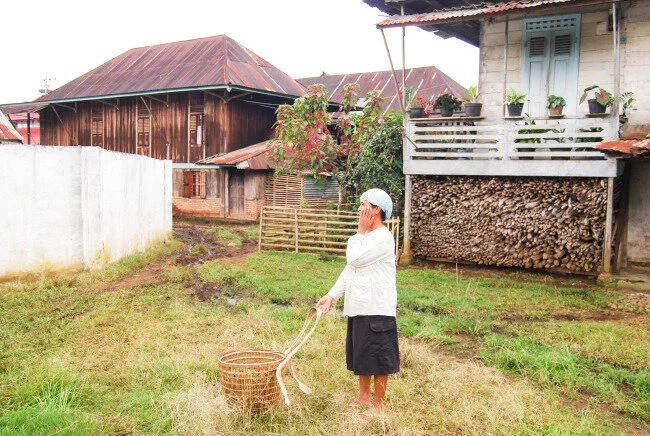
Her house is sturdy, also on stilts, and she is fortunate to have a deep well located just a few feet from her kitchen ladder. It is November in Indonesia and this means its coffee-picking season for those in our Sumatran village. Mama Arli and her husband aren’t home much; instead they are occupied with the daily task of harvesting beans, and then drying the beans on tarps beside their home.  


Would You Eat Your Lunch in a Cathedral?

Musing at Scorhill Stone Circle, England by Elyn Aviva

We trudged up the bleak hill, brown and barren. My husband, Gary, and I were hiking with a small group in desolate, wild Dartmoor National Park to a place we’d never been, following a faint path through the moor, a track barely visible in the water-logged, peaty soil. Our guide informed us that people can easily lose their way on the moors—experienced hikers, skilled in reading maps, disappear, their bodies found years later.

Photo By Herbythyme , CC BY-SA 4.0,

When I was 11 years old, my father took my 15-year-old-sister and me on a cross-country car trip from Tamaqua, Pennsylvania to Seattle, Washington to San Diego, California, and back in 30 days. What I remember about the trip was my father saying, “Here we are at the Space Needle (or Disneyland or the Grand Canyon or wherever), you have 10 minutes, take some pictures, I’m going to the souvenir shop to buy some pennants.”  (For some reason, we got into collecting pennants that ended up on the walls of our basement.) My father drove 10,000 miles in 30 days, and I got to see the U.S.A. at 60 miles per hour. 


In the mid-90s, I was living and working as an ESL teacher at a private school in Kanazawa, Japan,  a couple of hours by train from my relatives living in Kobe. I liked to visit them at least once a month to get to know them and stave off homesickness. The train ticket usually cost about $150. Sometimes I took the bus to save money, even though it was a much longer trip.


One day, our office boy, Kazu (who also worked part-time for a travel agency) told me that he could get me a free ticket to Kobe that weekend. He was booking a chartered bus which had an empty seat. The only catch, he explained, was "Overnight bus. Maybe you be tired." I said sure, that would be fine, "I can sleep on the bus." He gave me a quizzical look and said, "Ahhh...no sleep." As a foreigner, I was by then used to getting quizzical looks from the locals, so I didn't comment or think much about his hesitation. 

When the weekend came, my boss and his wife offered to drive me to the bus station. "So, Kazu got you on the overnight bus. Have you ever taken overnight bus before? You might be too tired when you get there." I said that I had taken other overnight buses and I could always fall asleep. "Hm. I guess you won't sleep," my boss said. I assumed he figured it would be too uncomfortable, so again I said nothing.

They dropped me off and said, smirking, "Okaaaay...have a nice trip. Let me know how you sleep." In retrospect, I should have wondered why they were smirking.

I learned long ago the correct way to hike the trail to Chimney Rock at Ghost Ranch in the Rockies of northern New Mexico. I knew I needed water, a jacket for rain, sunscreen (although in 1971, when I was six, we called it tanning lotion or sun block - and we only used it at the pool), and sensible, rugged shoes. Footwear absolutely needed to be ankle height, if not higher, with strong laces and a traction-optimized tread. Twisting an ankle always loomed as a real threat, and a good, solid lace-up boot would help prevent that. Snakebite, by a prairie rattler or the dreaded diamondback rattler, could not only wreck a vacation, it could take a life.  As a child I had no choice in the matter. When we hiked Chimney Rock, I wore my Red Wing hiking boots, which were perfectly serviceable. 

My love of cowboy boots came from my very first pair of Acme harness boots. I got them as a young boy in Nebraska, and they helped me feel independent, strong, protected, and stylish. I lost track of those boots, and really didn’t have another pair until late into high school, at which time I was too cool to wear them -- city kids just didn’t wear boots. We left ‘wearin’ shit kickers’ to the country boys.  I chuckle when I return to Nebraska now, because with enough distance, I can see that my hometown has and probably had plenty of room for cowboy boots.

Christmas in Kyoto did not sound promising but the flight was cheap. Having spent the last several Christmases huddled around the small wooden tables of the German Weihnachtsmarken, hands wrapped tightly around steaming ceramic mugs of glühwein, we expected Japan to be a bit of a disappointment in terms of holiday spirit.

There would be no Christmas markets selling roasted sausages or over-sized steins of altbier. There would be no outdoor festival tables to provide the inevitable camaraderie that accompanies the mass consumption of mulled wine in freezing temperatures. Communication would be near impossible as both my wife Lauren and I spoke very little Japanese and could not read kanji or katakana.  

Nonetheless, one evening as we approached the bottom of our second bottle of wine, we decided Kyoto would make for a fine introduction to Japanese culture, with the added bonus of seeing drunken Japanese “salary men” stumbling around in Santa hats.

I was in the back of a truck bouncing through Port-Au-Prince with six strangers. We sat in complete silence as we drove past groups of children, their pleas for money blending into a steady drone of unintelligible noise as we passed. The only thing separating me from the Haiti I had heard so much about was a thin metal grate. Barely enough to keep the children from climbing in when we stopped, it only mildly interfered with my view of the city. 

I expected to feel bad. I knew Haiti was the poorest country in the western hemisphere. I knew they had severe problems with deforestation and clean water. I thought when I arrived I would empathize or feel sad for them. Instead, I watched silently as we made our way through the streets, feeling only wonderment. 

Little did I know that in a few days I would have the most shameful experience of my life.

Editor's Note: This article is part of a new series by writer-photographer Paul Ross featuring field-tested reviews of places, products and services that enhance the travel experience. All are evaluated honestly. If something is just bad, he won’t write about it. If it's really bad, or darn right dangerous, he will warn you. 

Story and photos by Paul Ross

This year I decided to celebrate my birthday early in San Francisco. 

As an AARP-certified senior, it’s years since I’ve been festive about my natal day and even longer since I’ve visited “Baghdad-by-the-bay” (coined in the 1940’s by San Francisco columnist Herb Caen). Growing up in Southern California, I osmotically acquired a slight sense of residual rivalry toward Frisco. We had sun, surf, sand, and they had fog, cold, and business. As an adult, I figured it was time to explore what many locals call “the City” had to offer.

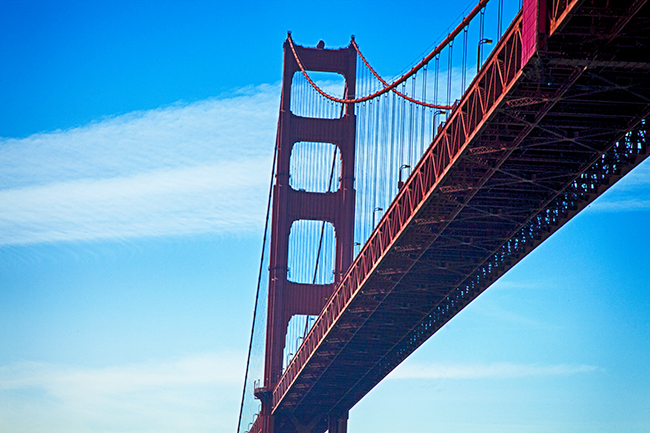
The Golden Gate Bridge. (The only ways to get this particular view are swim, jump or take a bay cruise. I recommend the last.)

BAY AREA CLASSIC

I decided to start out with a Bay Area classic: the venerated Mark Hopkins hotel atop elegant Nob Hill via cable-car-carrying California Street. The hotel features a museum of the hotel’s colorful history from its Victorian era founding through its heyday housing of celebrity guests; their favorite watering hole was the Top of the Mark with its almost 360 degree view.

I was fascinated by nostalgia-laced mementos and exhibits, like a video interview with a nonagenarian who was once a nude model and photos of the big bands that had played there. “The City” preserves her majesty in ornate buildings and cable cars, one of which I rode down to Chinatown, while vowing to hike back up the really steep slope to work off Sum of my Dim dumplings. 

When, on a family vacation, I first went to Chinatown as a kid, my grandfather took us all to a restaurant frequented by Danny Kaye, so of course I had a yen to go back. Located on heavily touristic Grant Avenue, the food is so tired that it could’ve been leftovers from Kaye’s days. But when I walked a few blocks from Grant to Jackson Street, I discovered Z & Y, which, despite its bland name, featured hot and spicy Szechuan delights I never dreamed of as an L.A. boy. Z&Y is on the same block as the P&R and the ABC restaurants and is as easy to find as 1,2,3.

Inside Jamaica’s Blue Mountains: A Stranger in their Midst

by Laura Albritton

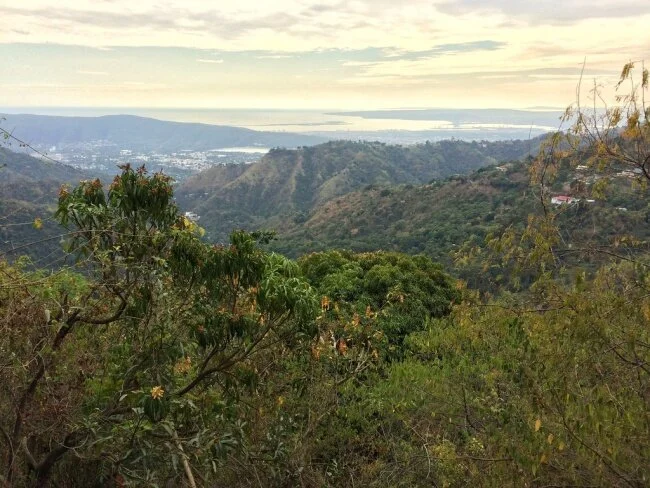
The ancient Land Rover banged through another pothole as the rain poured onto the muddy, treacherous road. “We’re almost there,” my husband shouted encouragingly. I nodded, and clutched the door handle even tighter. Our little baby, carsick, had already thrown up twice. Driving from Kingston up 4000 feet into Jamaica’s Blue Mountains, with precipitous drops just steps away, frightened me into speechlessness. When the vehicle’s tires slipped at a hairpin turn, I silently begged God to keep us safe.

by Atreyee Gupta


I felt like a decathlon athlete as I stepped off the train from Nice to Marseille. I had my most comfortable walking shoes on, a checklist of all the important sites to visit in my hand, and I was ready to tackle France’s second largest city. I looked around me. The port city was hectic with buses and cars whizzing past me and hundreds of people crowded onto the sidewalks. Still, I was primed to dive right in. I perused my inventory of important landmarks once more. I stretched my calf muscles, adjusted my backpack, and took a quick swig from my water bottle. I had eight hours to conquer Marseille and no time to waste.

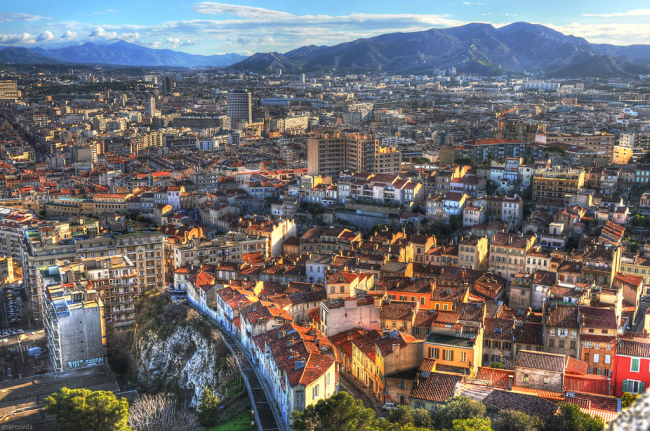
View from ND de la Garde. Photo by marcovdz via flickr CCL.

According to guide books I had read, there were eight places I needed to visit in Marseille. I had them arranged in order from closest to farthest from my train depot: the old port, the fortress of Chateau d’If, the Cathedral de la Major, Saint Victor’s abbey, Notre Dame de la Garde, Borély Park, Palais Longchamp, and the Museum of Beaux Arts. I had a return ticket for the evening so whatever I didn’t finish would remain unseen, but I was convinced I could match the frenetic pace of this seaport and emerge a winner in my tourist marathon.  

I speed walked my way to the Old Port, where fishing boats and svelte yachts were crammed together like so many sardines in a watery can. I heard various shouts coming from the sellers as I passed the rickety ice tables packed with strange looking sea creatures, but I couldn’t stop until I saw the ferry boat for Chateau d’If: a famous prison and the subject of Alexander Dumas’ novel, The Count of Monte Cristo. The crowds were almost impassable on the island penitentiary, but they were no match for my fierce determination. I managed to squeeze my way past as I ran to see an empty cell, the communal cistern, and the rooftop view. Time was ticking and I had to catch the next ferry back so that I could head towards the Marseille Cathedral.

by Izaak Diggs


It would be easy to dismiss Barstow as a wasteland: You've got the heat in the summer and the poverty year round. Faded mobile homes and salvagers making monkey shapes as they strip valuable tiles off collapsing houses. To the casual glance it is just a place to fill your gas tank or grab a burger or use a restroom. Just another desert town, just another exit or two along the interstate to somewhere else. Why was I there? Was I following a genuine spark of inspiration or had I lost my mind? All I could do was wring my hands, question my sanity, and take more notes. 

Barstow has always been a hub. Starting in the nineteenth century it served long distance travelers and the mining towns in the region. The desert is a popular place for mines: Men digging holes in the ground, getting a little closer to Hell in the hope of cheating the Devil at poker and getting a monopoly on brimstone. Gamblers with chin beards and suspenders who directed other men into the dark recesses of the earth. They oversaw the creation of towns that thrived for awhile only to die and be reclaimed by the desert after.  Fortunes made and lost; a story told countless times in the history of mankind. The story of Barstow is nearly identical to scores of towns scattered like seeds throughout the Southwest.   

I went down to the desert with nearly every penny I had. I stood on a salt flat, waited for the wind to rise, and tossed all the bills in the air. They were carried in every direction; to fast food restaurants and cheap motels and gas stations. Like those men with chin beards and suspenders I gambled everything I had on a dream, on an idea.  I gambled it on the desert; I gambled it on all the little towns like Barstow and Lone Pine and Tuba, Arizona and Capitan, New Mexico. I rolled the dice that there was a story there lurking like a scorpion in a yucca.