Wash, Rinse, Travel: Why the Laundromat Might Be the Best Place to Meet Locals
After forty years of marriage and travel together, my wife knows this statement is coming. We’ve long since moved past the “why don’t you pack more clothes” harping. The last time we had that discussion, we were at a Dairy Queen on a motorcycle trip along the Idaho-Montana border. In the 95-degree late-afternoon heat, with a fair distance to cover to our next campsite, I mentioned the dreaded L word. The discussion turned sharp. My wife asked, in a voice that carried across the parking lot, “Is that really necessary?” Parents waiting for their soft serve pulled their young children closer for safety.
My efforts to win the minimalist travel-packing award follow a familiar pattern. After a few days, I realize I’m likely to run out of clean clothes. When my underwear supply runs low, a small panic sets in, and I do mental gymnastics. My strategies center on stretching what’s left. “Should I wear each for two days? How about three?” The prospect of turning them inside out seems to defeat the whole point of having underwear, so I rarely consider it. Eventually, I state the obvious: “So I’ll need a laundromat in the next few days.”
Today, we’ve matured beyond that. Now I just mention the need for a laundromat visit, and she’s ready for an afternoon with a novel. Forty years of laundromats have meant forty afternoons together.
Even at home, I like doing the laundry. It’s one of those small, achievable projects that gives me the satisfaction of getting something done. So a laundromat stop on vacation feels oddly comforting. “I am a productive member of society,” I say to myself. As a minister, I spent decades encouraging people to take care of themselves and find peaceful, re-creating time. I struggle to live that message. Maybe the laundry is a psychological trick to ease the guilt of taking time for myself. Call it first-world traveler syndrome: vacations are deemed necessary, but not everyone can take time off. Why should I? A laundromat lets me rest while telling myself I’m working.
We were in Vienna once, at the halfway point of a bicycle trip along the Danube on our way to Budapest, Hungary. I’d built in a couple of relaxing rest days: a classic breakfast of bread, a soft-boiled egg, and Viennese coffee; a Vivaldi concert at the Karlskirche, where the Italian composer had his last tour stop, though no one knows where the headstone went. But early on a Sunday morning, I suggested we go to a laundromat. After all, my biking kit certainly needed a good wash after a week of cycling through all manner of weather. For some reason, my wife didn’t resist this suggested morning excursion. I’d witnessed people in Belize washing their whites in a river and hotel housekeepers in Manhattan wrestling giant machines, and I felt a bond. But try reading laundry instructions in German while local university students lined up behind me. The pressure was on. I was still fiddling with my phone’s translation app when my wife came over, pushed the start button, and returned to her novel.
A laundromat is one of the few places a tourist briefly becomes a local, sitting among people who aren’t on vacation. Sometimes the other people aren’t locals either. One time, while on a summer camping trip in Maine, we met a young woman traveling across North America in a homemade pickup-truck camper. She and her companion, an enthusiastic black Labrador Retriever, had settled into the strip mall parking lot. The smell of a joint, still illegal in Maine back then, drifted across the lot. She seemed to be waiting for someone, though I’m still not sure who. We eagerly accepted her tour of the camper. We declined her offer to send up smoke signals of our own. She had that 1967 Summer of Love look, right down to the flowers in her hair. I asked her if she was going to California, and she said, “Been there, the people are mean and superficial.” I said, “Well, isn’t that the appeal?” She and the dog looked at me and tilted their heads.
This summer, I vowed to plan better to avoid the laundromat, mostly to keep the peace at home. That vow lasted until lunch in Lake George, New York, where I found the ideal laundromat near the start of a rail-trail bike path. I had grand plans to toss the laundry into a washing machine just before heading out for a ride, then return to move everything into the dryer, take another bike ride, and end with a meditative folding session.
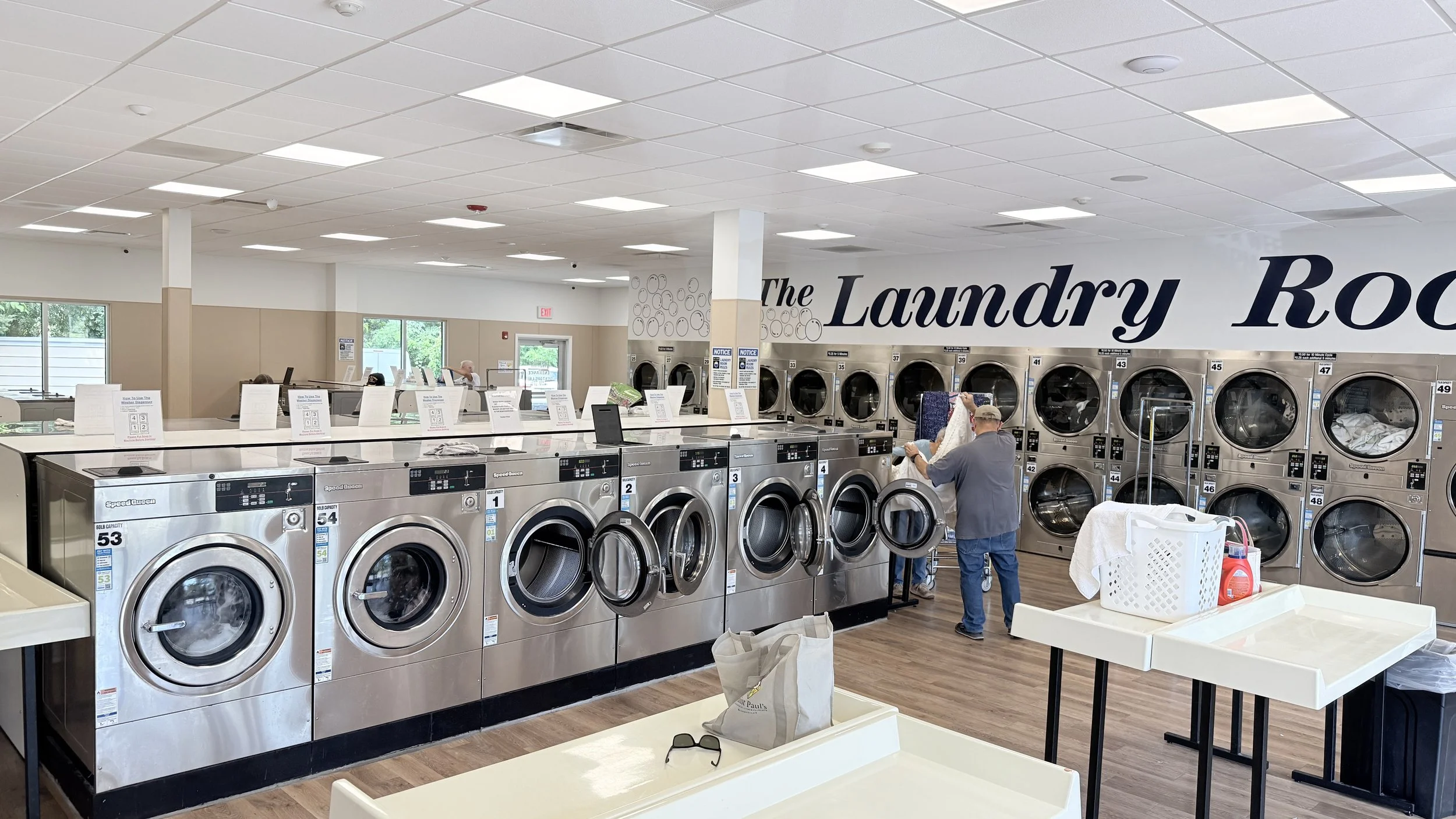
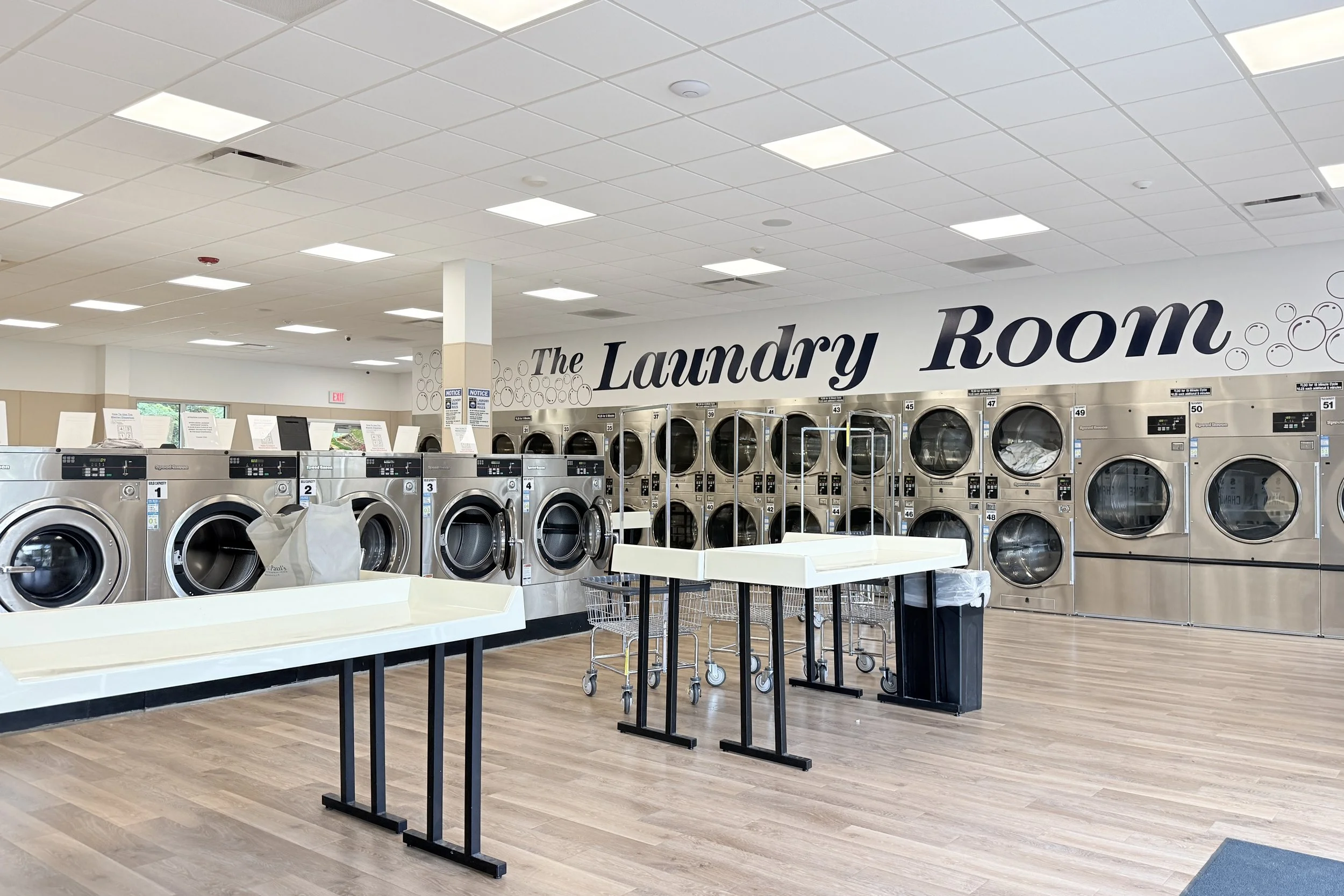
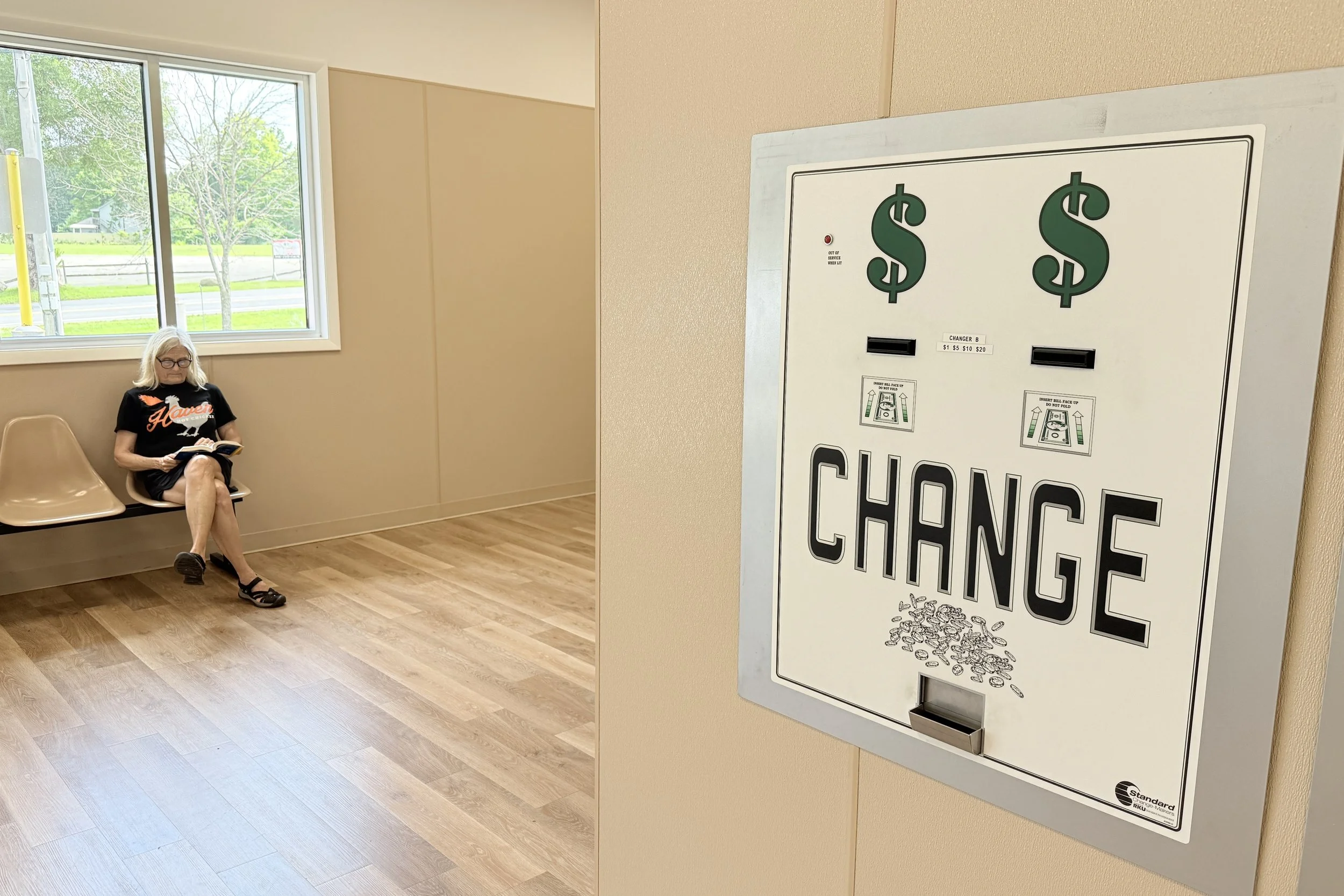
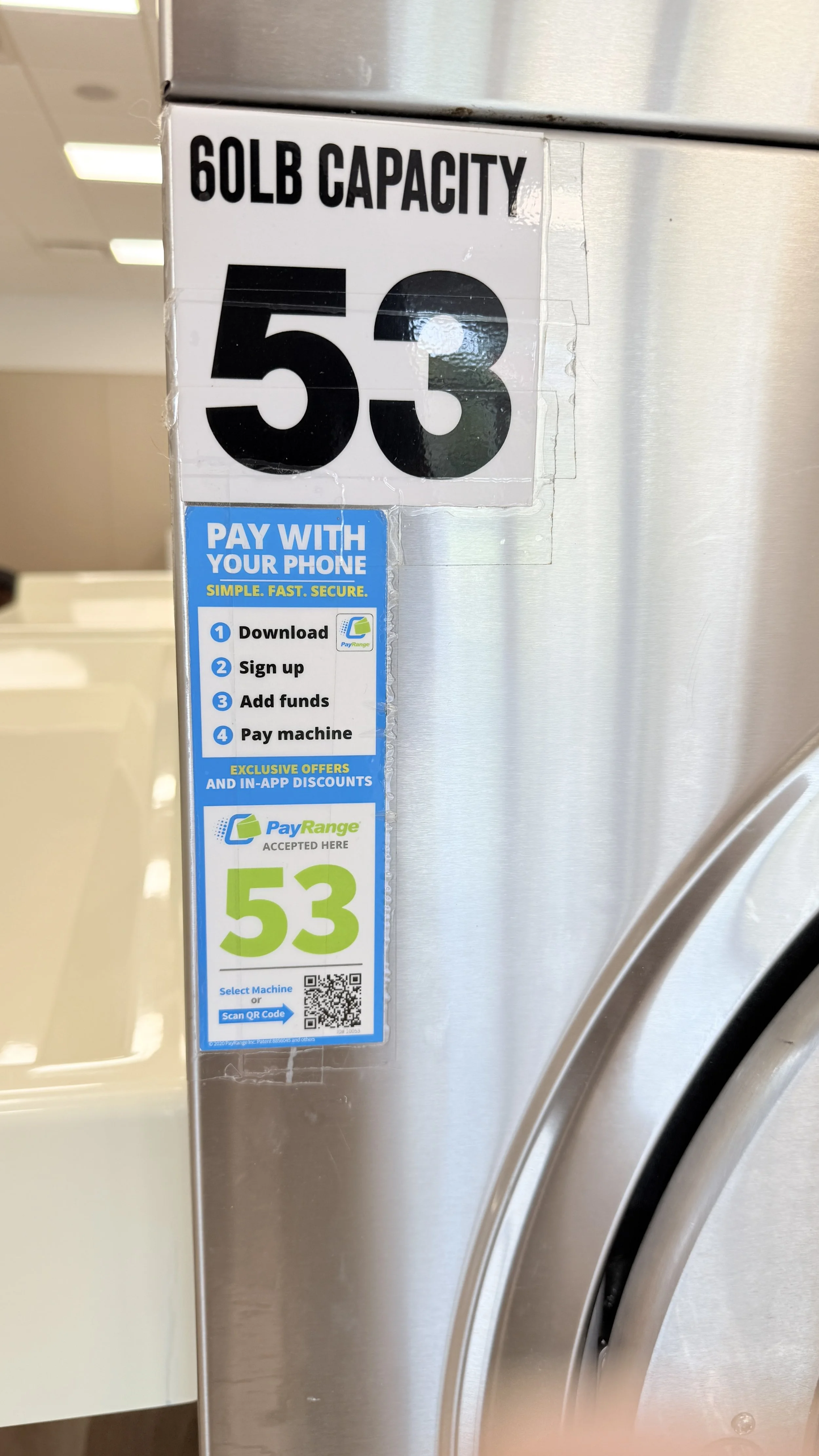
I encountered two problems. I had no quarters, and the change machine was out of order. I rummaged through the car, checking corners and crevices for loose coins. All I found were months-old animal crackers from the last time the grandkids rode with us. The second problem involved modern laundromat technology. Every machine required a mobile phone app. Wow, I thought, we’ve really entered the new era of laundromats. However, the app required a $25 bank transfer, two forms of ID, and a password verified by a two-factor authentication process involving a foreign government. I just wanted to wash some clothes, not set up a hedge fund. I glanced over at my wife, happily ensconced in her book.
I then realized these machines were something out of The Jetsons, where your clothes are washed, dried, and folded in five minutes. I might be exaggerating. That meant no time for a bike ride. I now have $13 sitting unused in a laundry app, which I think of as my Swiss bank account.
My wife and I plan to travel again soon. For my birthday, she gave me a laundry bag, a dozen pairs of boxers, and a larger suitcase. She also bought herself a very thick novel, just in case.
James Hazelwood is a travel writer and photographer living in New England's smallest state, Rhode Island. His work has been published in regional and national publications. His website is www.jameshazelwood.com