The Daily Travels of a Tray of Baklava
I am a tray. Round, made of copper, lined with tin, a little wider than a man's arms can comfortably hold. I was hammered into shape in Bakırcılar Çarşısı, the coppersmiths' bazaar below Gaziantep Castle, where the sound of mallets on metal starts early and never quite stops. Since then I have spent my life in one baklava house, and every day of that life has had the same shape: I start empty in the dark, I end empty in the light, and in between I hold something the whole city cares about.
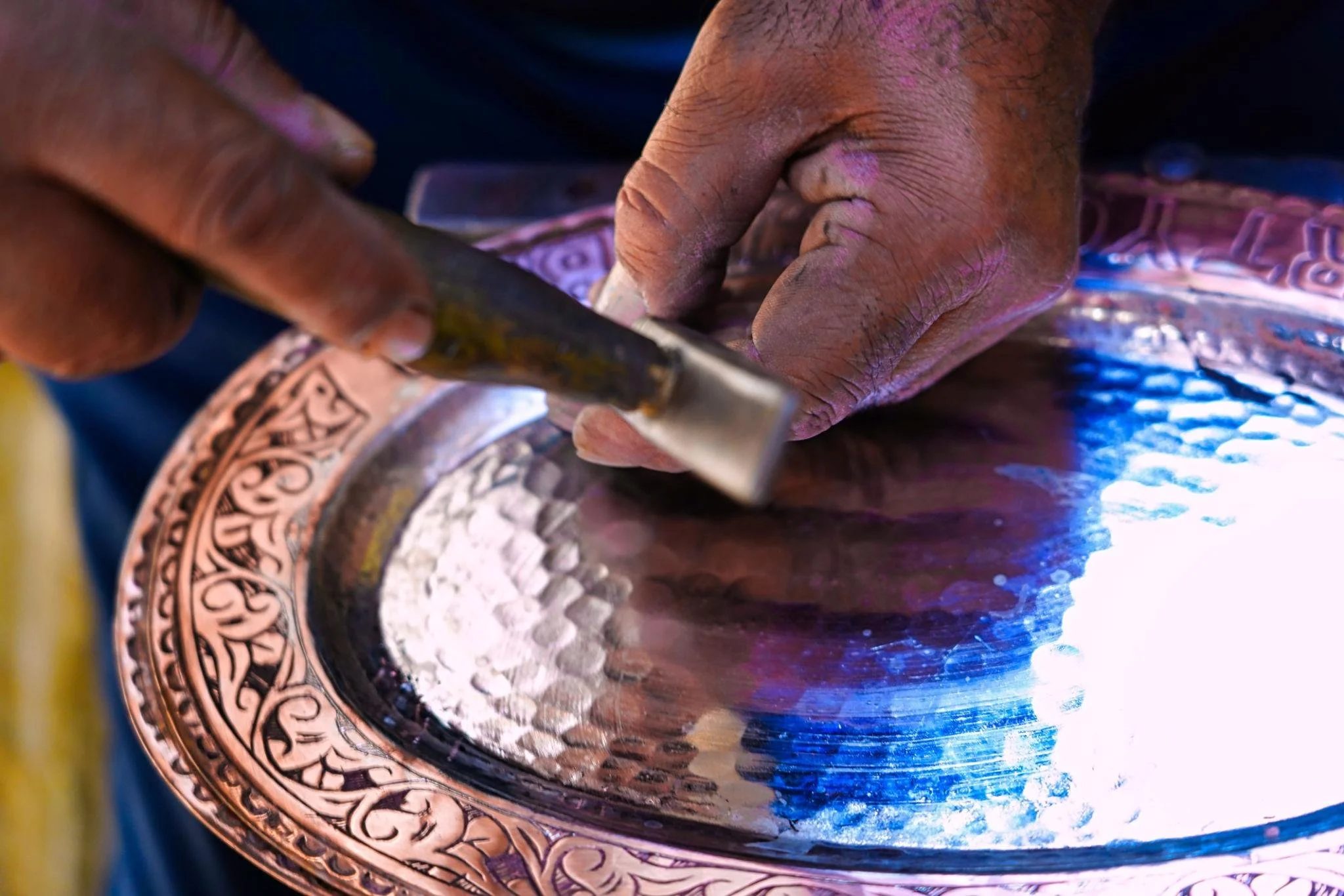
Gaziantep's centuries-old copperworking tradition provides the unlikely narrator for a story about the city's beloved baklava.
Let me tell you about one of those days.
Before dawn
The street is still asleep when the lights go on in the kitchen. Someone wipes me clean and brushes my floor with clarified butter, warm and golden. In Gaziantep this matters. Baklava here is made with pure butter, and the cooks can smell the difference before they taste it.
On the next table, pistachios are being cracked and sorted. These are not the pale, salty nuts you buy in a bag at the airport. They were picked early in the summer, before they were fully ripe, and their colour is a green so bright it looks almost unreal. Here they call them boz. They are ground coarsely, never to powder, because a piece of baklava should crunch.
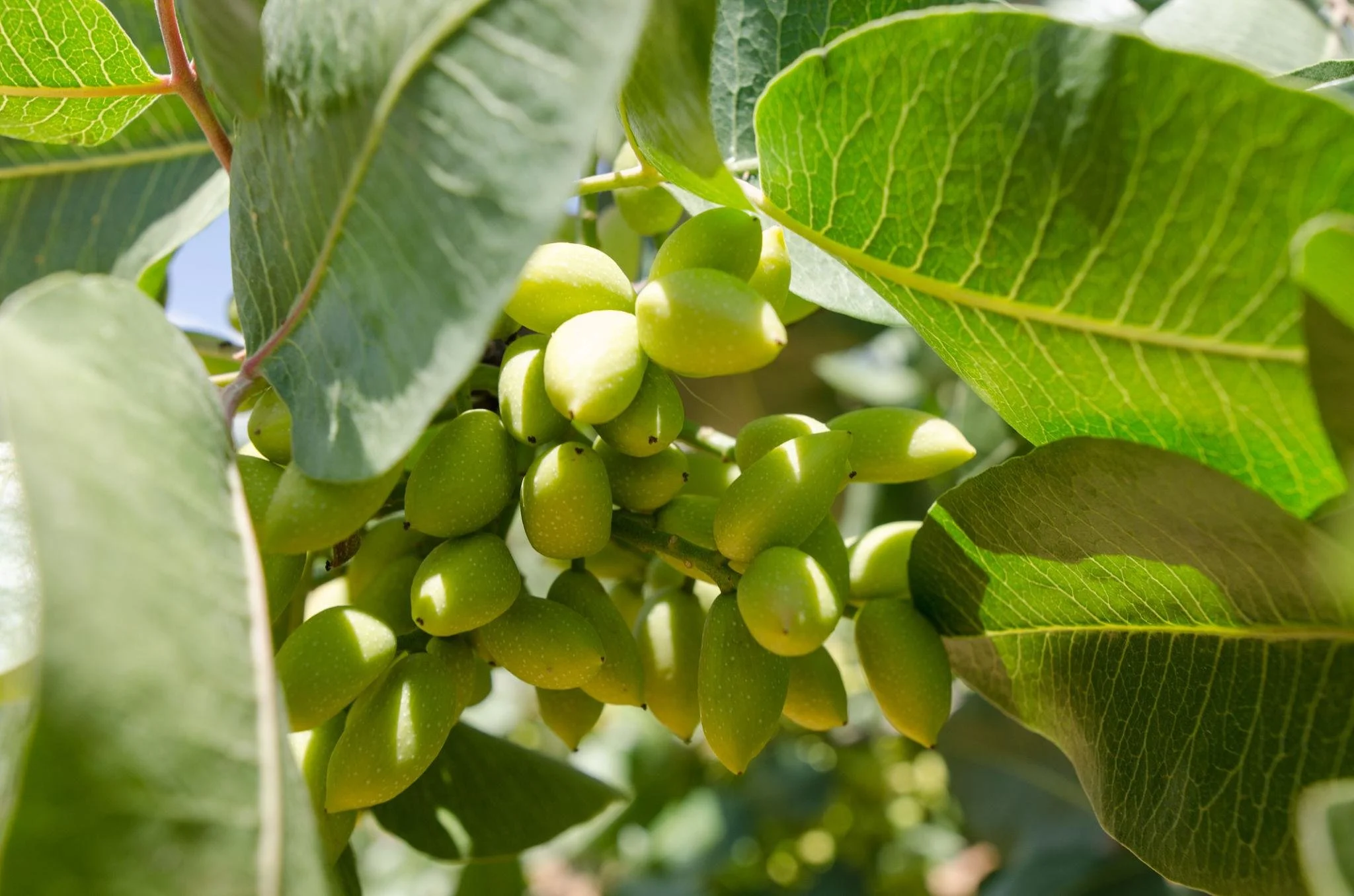
Harvested before they fully ripen, Gaziantep's prized green pistachios give the city's baklava its distinctive color, flavor, and crunch.
Then the dough arrives. I have watched it a thousand times and it still surprises me. A small ball of flour, water and egg is rolled out with a long thin pin, again and again, until the sheet is so fine that the old masters say you could read a newspaper through it. The sheet is lifted, carried through the air like a curtain, and laid across me. Then another. Then another.
The layers
This is the quiet part of the morning. Sheet after sheet settles on me, each one brushed with butter. Halfway up, the pistachio goes in, a thick green layer spread from edge to edge. Then the sheets begin again on top. By the end there are around forty of them, and I am heavy.
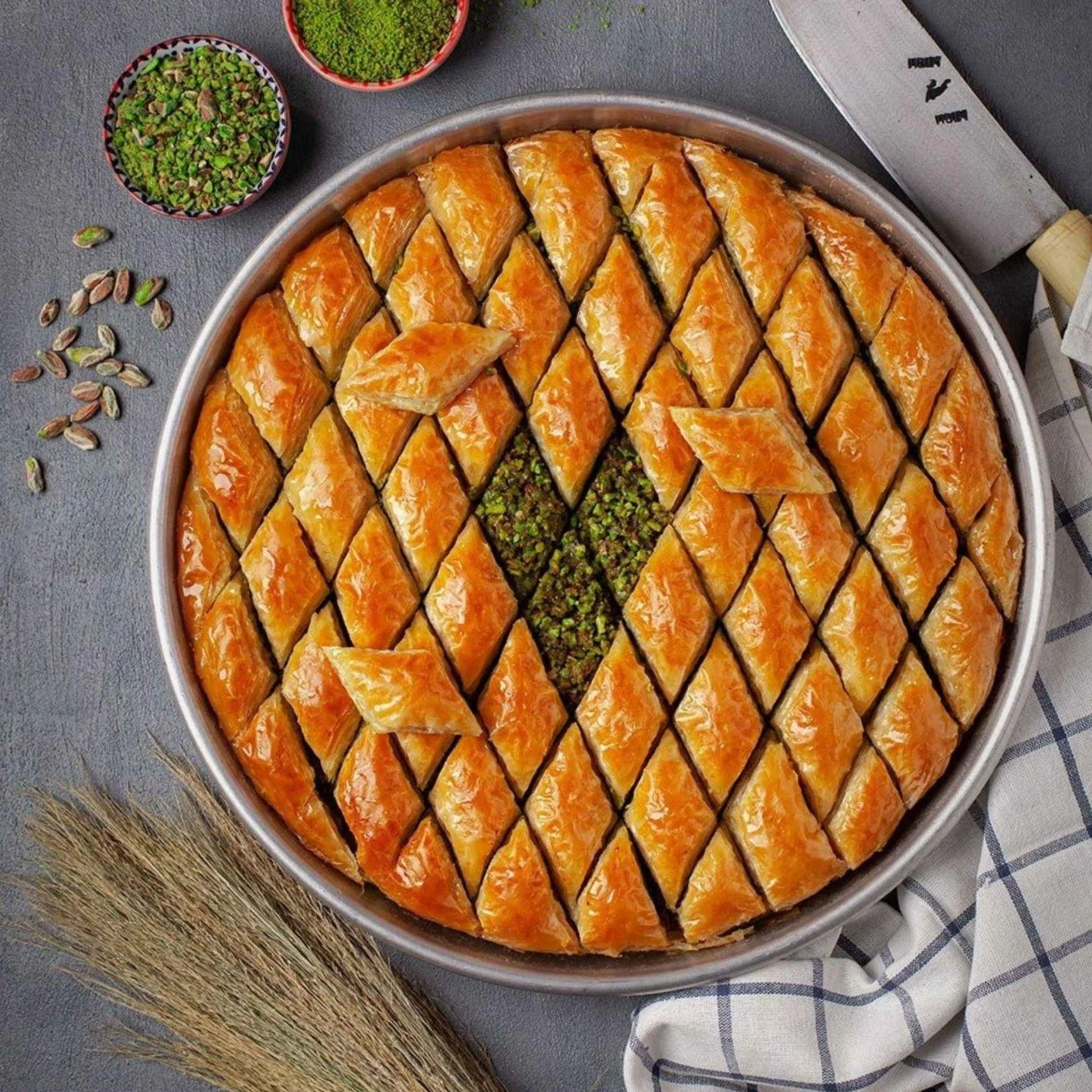
Then the knife. A good cook cuts me in a single confident pattern, straight lines crossing into diamonds in the middle. At my edge, where the circle curves, the pieces come out long and bent. They call that cut havuç dilimi, the carrot slice, and many people in Gaziantep will tell you it is the best part of the tray. I would not argue.

Carefully cut and layered, traditional Gaziantep baklava reflects generations of culinary craftsmanship.
Fire and syrup
The oven is the hottest place I know. I go in pale and come out golden, the top layers lifted and crisp, the butter still singing at the edges. And then, while I am still hot, the syrup is poured over me. Cool syrup on hot pastry: there is a hiss, a sweet steam, and then silence while the layers drink it in. A good tray of baklava does not swim in syrup. It holds it inside, and by the time it reaches a plate, the plate should stay almost dry.
I rest for a while. Outside, the sky is turning grey, then pale blue.
The morning rush
People who visit Gaziantep are often surprised by this: here, baklava is a morning food. The first customers come in before work, stand at the marble counter, and eat a piece or two with a glass of tea. An old man orders "the edge" without looking at the menu. A young woman asks when I came out of the oven, and the cook answers proudly, because he knows the answer.
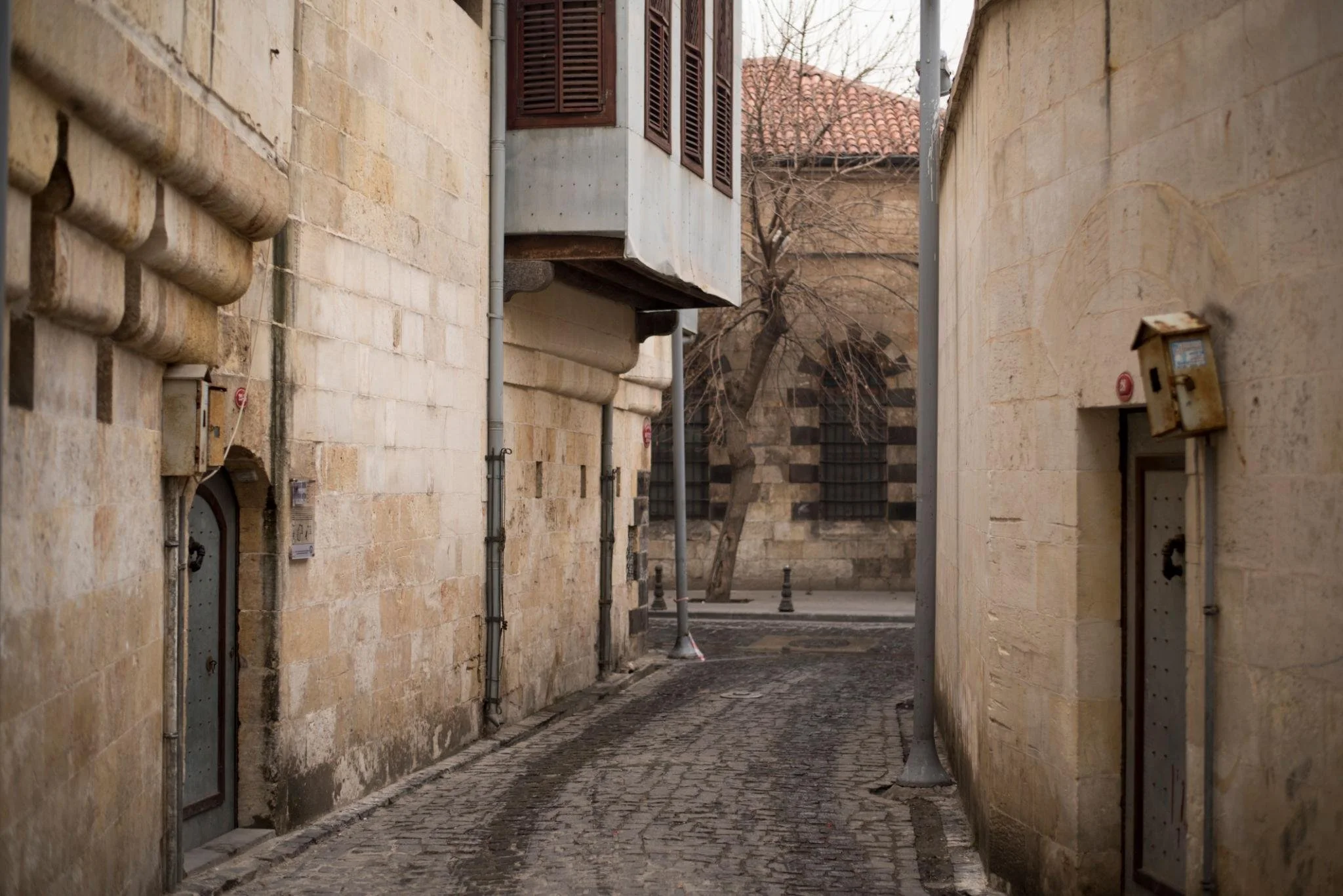
Beyond the baklava shops, Gaziantep's historic streets are part of a city where food, craftsmanship, and hospitality remain closely connected.
Piece by piece, I am lifted away. Some of me goes onto small plates. Some goes into boxes tied with string, for an aunt in another neighbourhood, for a new neighbour, for a family visit that cannot be made empty-handed.
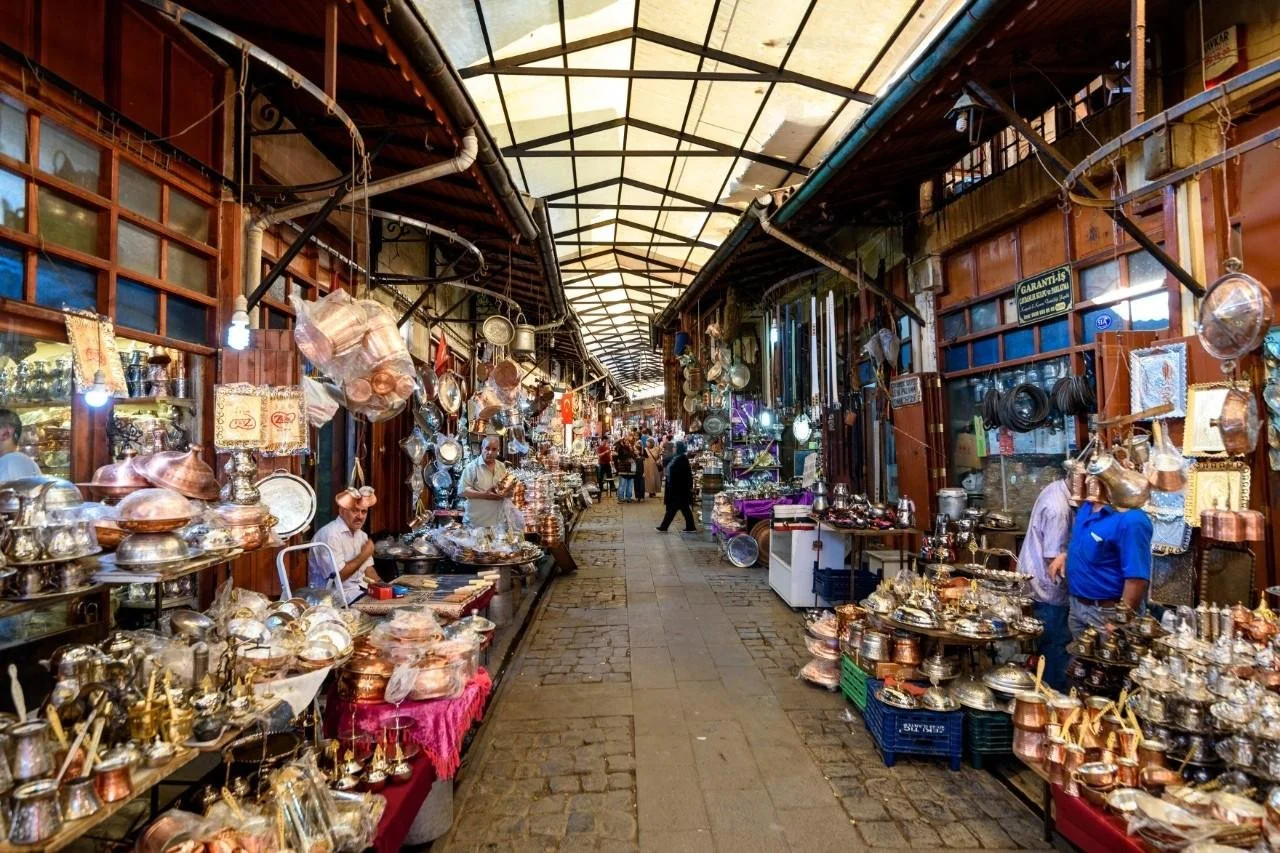
Copperworking remains an enduring part of Gaziantep's cultural heritage, from the city's bazaars to its traditional kitchens.
The table
I cannot follow those boxes, but I know where they go, because I have heard the same stories at the counter for years.
They go to living rooms where guests are welcomed, to tables where the tea comes after the baklava and never before. Before a religious holiday, on the day the Turks call arefe, mothers in Gaziantep used to make baklava at home, to offer to everyone who came to visit the next morning. Today most families buy it from places like mine, but the custom of sharing has not changed. People still say that a good holiday is one where the tray is empty by evening, because an empty tray means the door kept knocking.
There is another custom I love. When a neighbour sends you a plate of something sweet, you never send the plate back empty. You wash it and fill it with something of your own. And so the plates travel between houses, back and forth, for years.
Empty again
By early afternoon, I am bare. A few crumbs of pastry, a last smear of syrup, a single forgotten flake of pistachio. Someone washes me and dries me and stands me against the wall.
This is my favourite moment. Not because the work is over, but because of what the emptiness means. Everything I held this morning is now somewhere else in the city, on someone's plate, between someone's fingers, in a conversation I will never hear.
Tomorrow, before dawn, the lights will go on again.
Mehmet Özbakır lives and works in Gaziantep, Türkiye. He works at Antep Foods, a chocolate and confectionery maker in the city, and writes about the food culture of south-eastern Türkiye. antepfoods.com